
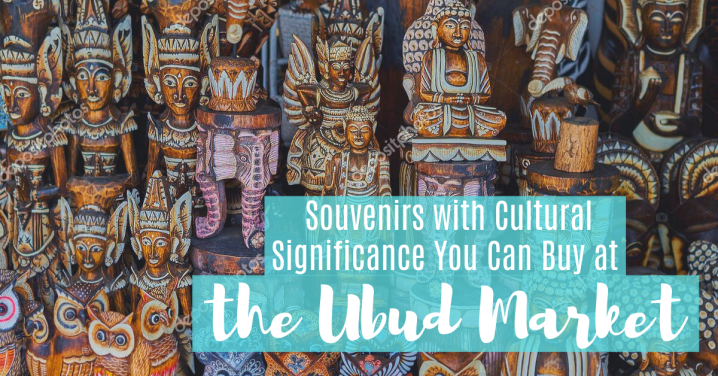
The Ubud Market is one of the most popular – and largest- markets in Bali. You can buy almost anything at this market – from fresh fruit and vegetables to cheap t-shirts and sunglasses. But if you’re looking for a souvenir that isn’t just cheap and pretty, but also has cultural significance, then these are the items you’re going to want to keep your eye out for while walking through the Ubud Market.
Incense (Dupa)
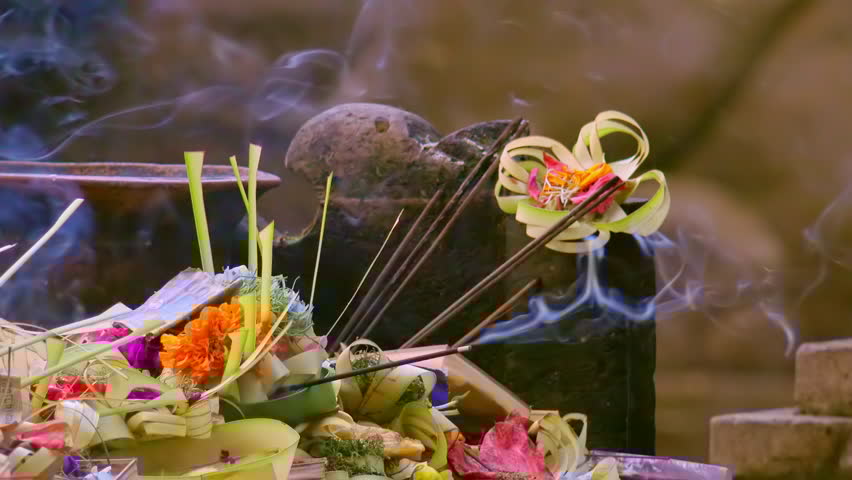
Incense sticks are made of bamboo or wood, and dipped in a mixture of fragrant herbs. Incense plays a crucial role in Balinese life. As you walk along the streets, you will notice flower offerings placed in front of shop doorways and next to statues and temples. Each of these offerings (called canang) has an incense stick placed directly in the middle because the Balinese believe that the incense helps carry their prayers to the gods.
Wood Carvings (Patung Kayu)
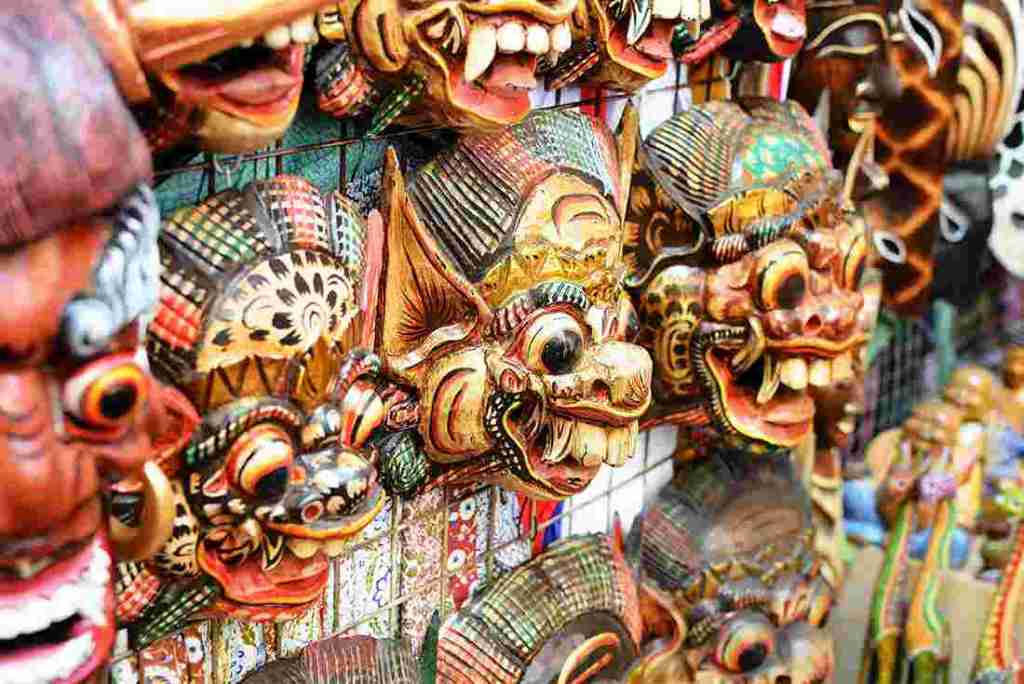
Wood-carving evolved in Bali as a form of spiritual devotion and, until the 20th century, carvings were exclusively used in temples and palaces. Decorative panels, ornate doors, figures of the deities and masks were created for ceremonial use and often had the function of warding off malevolent spirits.
A wide range of local wood is used in the production of carved goods in Bali; most notably, jackfruit, crocodile wood and hibiscus.
Sarong
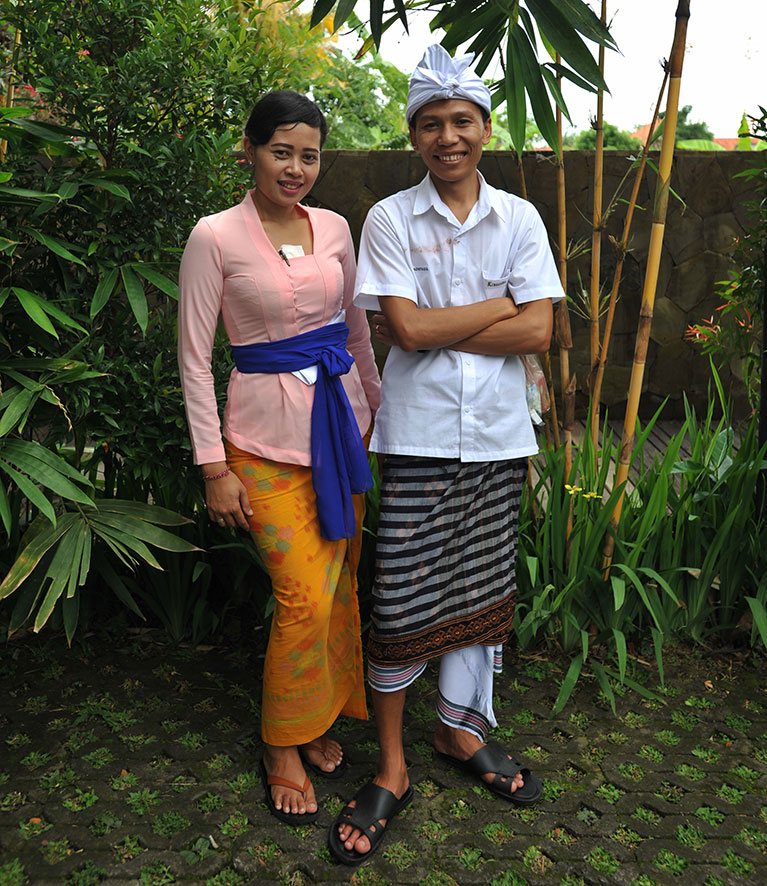
The sarong (called Kamben) is a cloth worn by both men and women in Bali to cover the lower part of their bodies. It is typically tied around the waist and falls just right below the knees.
For men, it is customary for the kamben to be wrapped from left to right, representing the good (dharma). Women wear the kamben from right to left, representing that women are saktis, and meant to balance the me .
Lontar Drawings
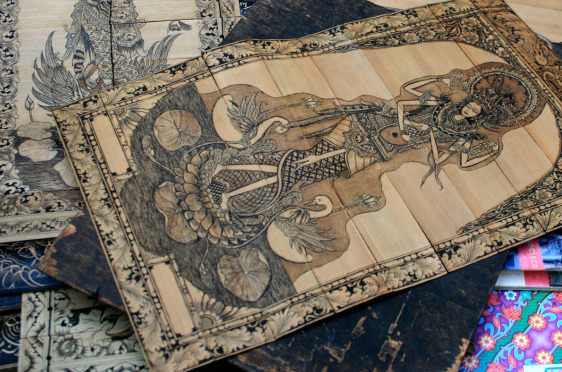
The palm-leaf (lontar) drawing is an ancient way of recording and transmitting different aspects of Bali life, History, Medicine (usada) and Religion. Using a special knife (pengetupa), a drawing or sanskrit text is engraved into the leaves. Then, ink (tingkih) is made by burning macadamia nuts with other secret ingredients. This ink is rubbed into the lines to make the drawing on the leaf visible.
Batik
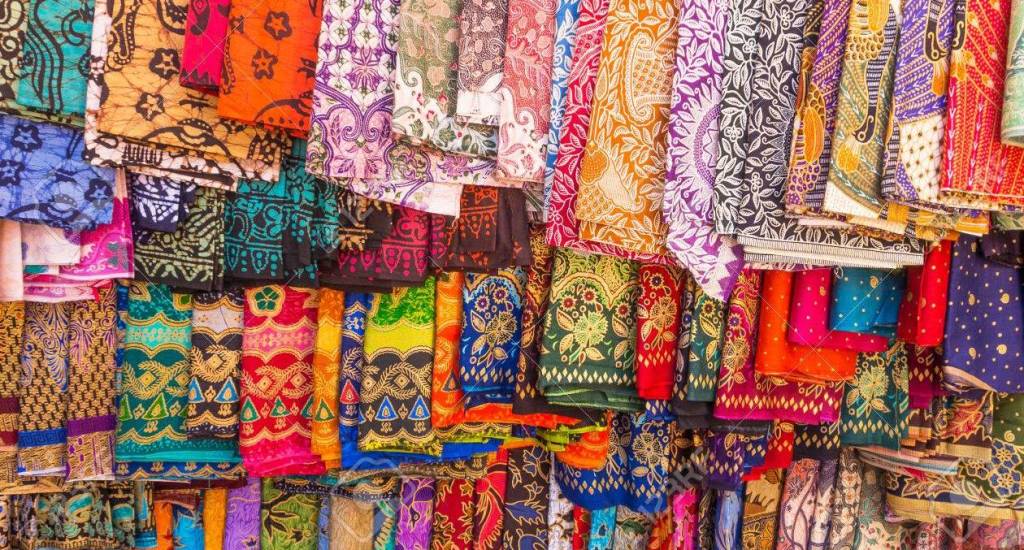
Batik is a traditional form of painting on fabric, in which dots and lines are created using wax to form a pattern. Indeed, the word “Batik” means “drawing with wax” and the technique is thousands of years old.
Balinese Batik is quite different from the batik in Malaysia or Thailand, specifically in design, motif and the way it is produced. In Bali, ” paraffin wax” is used to cover parts of the cloth before it is dipped in dye, thus ensuring that these parts maintain their original color.
Tridatu Bracelet
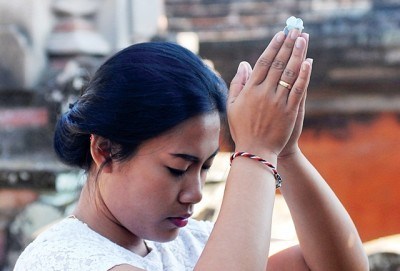
The Tridatu bracelet (Gelang Tridatu) is not a magic talisman; It is a symbol of the Tri Murti manifestation of Brahma, Vishnu, and Shiva and is typically worn around the right wrist. Tri Datu etymologically comes from the word “tri” which means three and “datu” means king, so Tridatu literally means three kings.
Red is the symbol of Brahma (creator), as well as of creativity and bravery.
Black is the symbol of Vishnu (preserver), as well as of power and protection from bad spirits.
White is the symbol of Shiva (destroyer), as well as of spirituality and goodness.
Poleng (black-and-white checked cloth)
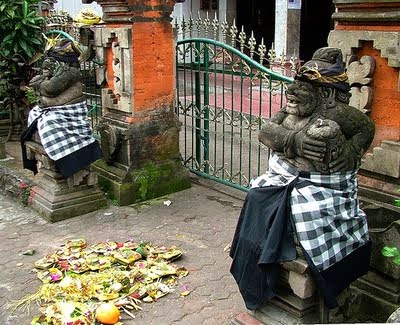
The poleng cloth symbolizes the concept of balance and harmony that is at the heart of the traditional Balinese way of life. Together, the colors of the Poleng cloth (black and white) symbolize Rwa Bhineda: the coexistence of opposites and the ultimate achievement of equilibrium.
Because the poleng cloth is a guardian symbol in the Hindu religion, a poleng-wearing statue signifies that the cloth is guarding the energy within, keeping the black-and-white sanctity of that statue intact. This cloth is so respected within the culture that when locals see an item wrapped or draped in it, they will honor it in some way (such as by saying a quick prayer when passing, honking their horn, or dimming their headlights).
Rice Paddy Hat
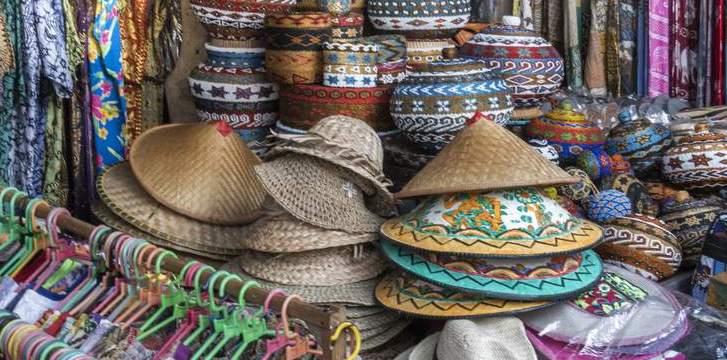
While a common item of clothing throughout all of Asia (where rice is a staple crop), the rice paddy hats are especially symbolic of the island of Bali, as no matter where you go on the island – even in the most touristy areas – you’ll be hard-pressed not to find a rice paddy. Some of the fields stretch on for miles, while others are just a small plot of land between buildings. Regardless, it’s clear that this island is still very much dependent on its local rice farmers.
Mini Versions of the Gamelan Instruments
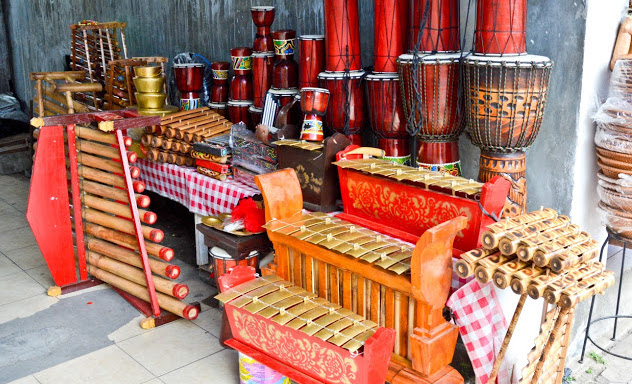
The Balinese Gamelan, or orchestra, is a staple of Balinese culture. “Gamelan” originates from the Javanese word “gamel”, which means “to strike with a mallet,” and unsurprisingly most of the instruments in the ensemble make sounds by being struck with a bamboo mallet.
Composed of a combination of metallophones, xylophones, drums, gongs, and sometimes flutes, the Gamelan is a key element of local religious ceremonies.
Two Souvenirs at the Ubud Market that do NOT hold any Cultural Significance
Dicks
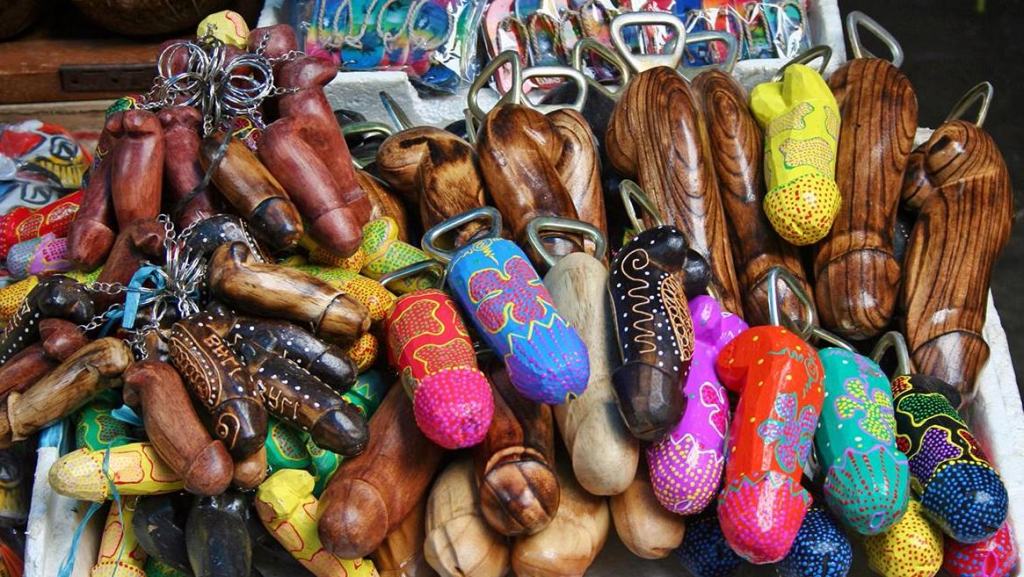
People will swear to you that these dicks are local Balinese symbols of fertility – and while obviously it isn’t a stretch to believe that a carving of a reproductive organ is symbolic of fertility, I’m here to tell you that these literally don’t exist outside of tourist markets.
Maybe in ancient times local Balinese would have/use these, but nowadays, the only people who buy these are tourists. If you want something with cultural significance, don’t believe the lies the shopkeepers will tell you… this ain’t it.
Wooden Chopstick Sets
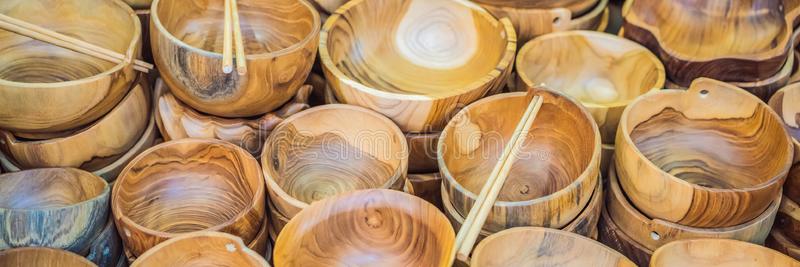
You may be in Asia, but that doesn’t immediately mean chopsticks are a cultural item. If you want to buy these at the market because they’re pretty, absolutely go for it! But don’t return home and say its a traditional set. The local Balinese eat with their hands when they’re at home (and at some local restaurants) or, otherwise, eat with a fork and spoon (no knife). No one in Bali uses chopsticks – literally, no one.
 acaligirlinbali.travel.blog