

I’ve listed all the must-try local foods in Bali (savory, sweet, and drinks) in order from what I MOST recommend trying during your trip to Bali to those that are LEAST important (either because they’re just not as good or because they’re not very representative of the local cuisine, even though they’re popular).
Savory
Beef Rendang
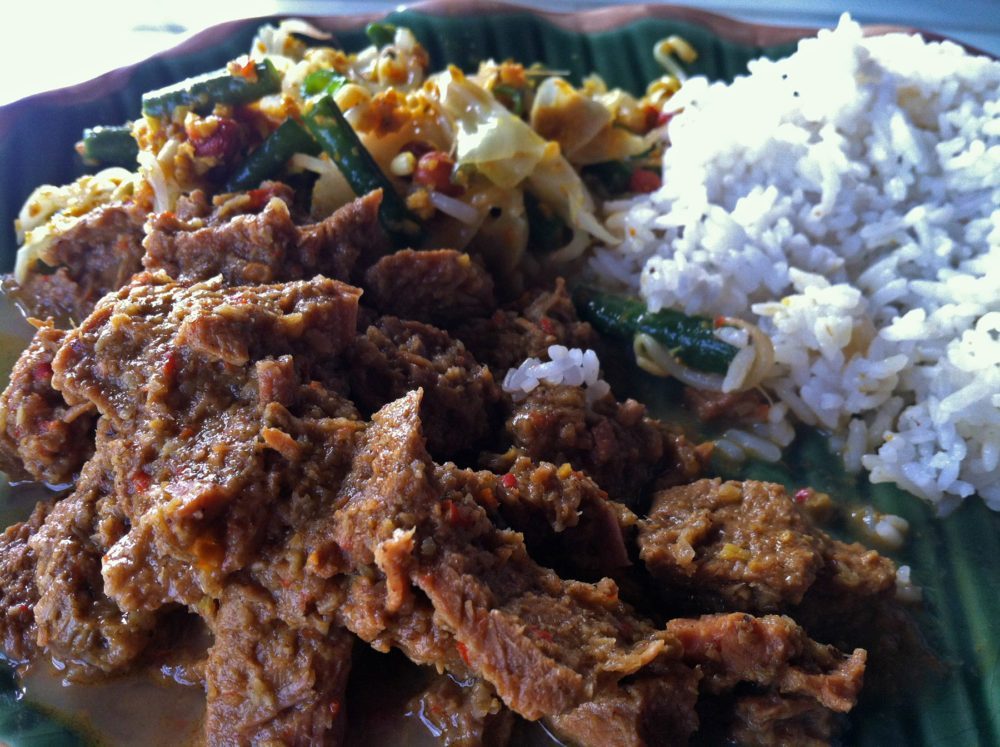
The beef in this dish is first simmered in coconut milk with a mix of Indonesian spices (as a paste) and lemongrass, and then seared. Typically served with rice, the addition of nutmeg to the spice paste truly makes the flavor of this Indonesian beef stew stand out.
Babi Guling
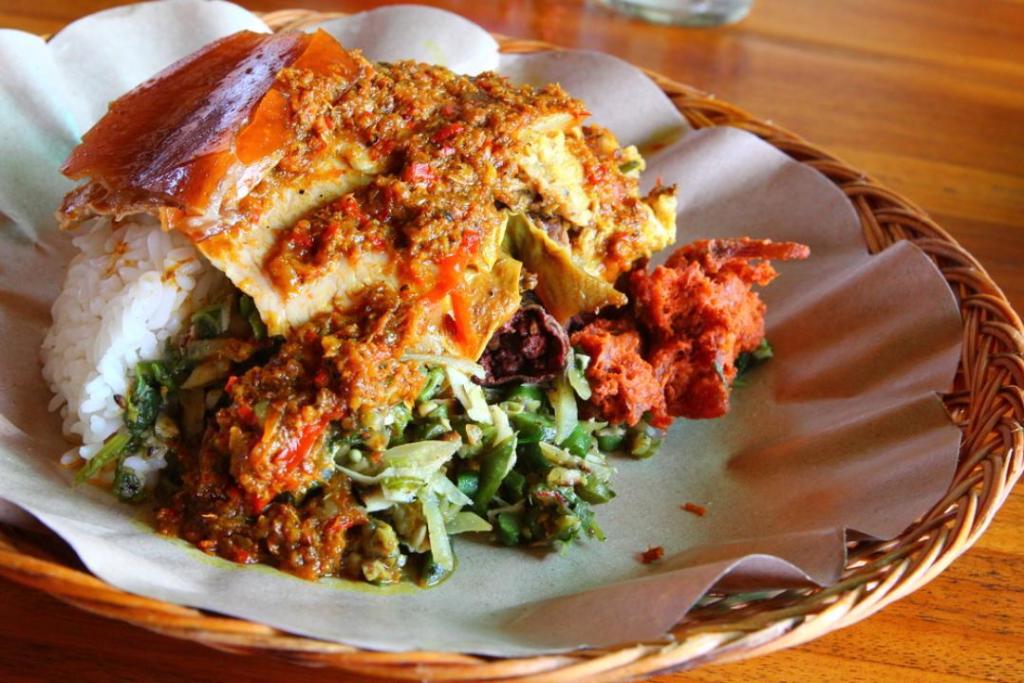
In Babi Guling, the pig is stuffed with a spicy concoction of turmeric, coriander seeds, lemongrass, black pepper and garlic, before being roasted whole over a spit.
Nasi Campur
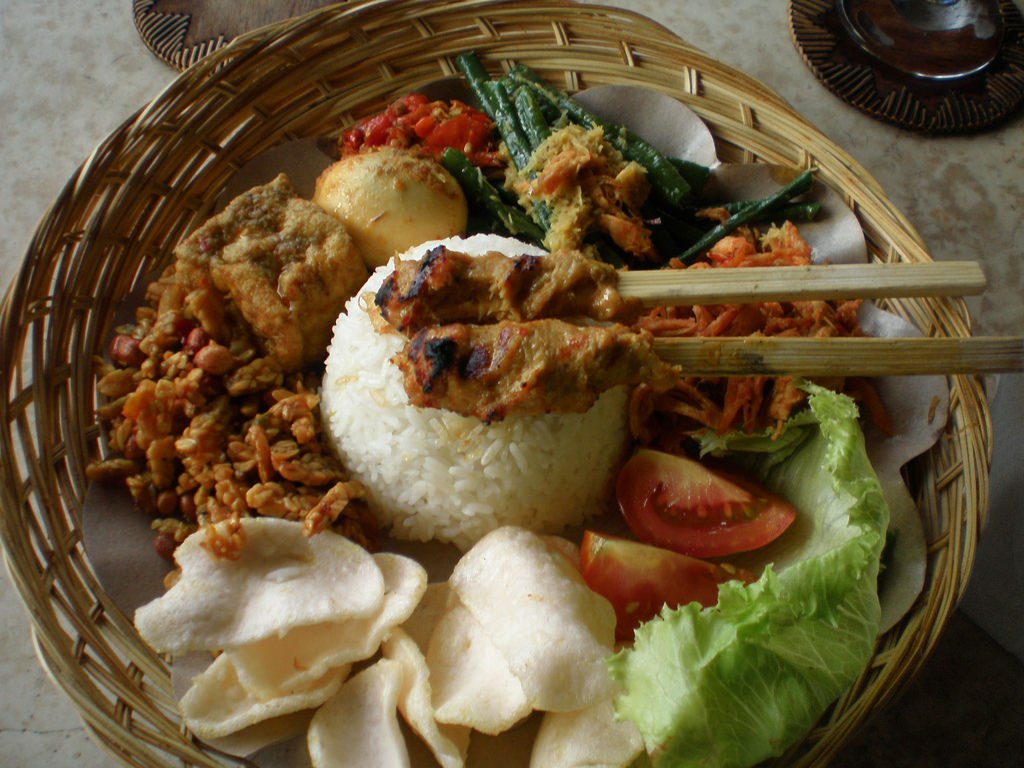
Nasi campur refers to an Indonesian dish that comprises a scoop of nasi putih (typically in the middle of the plate) surrounded by small portions of several other dishes, including meat, vegetables, peanuts, eggs, and fried-shrimp krupuk (aka shrimp crackers).
Jukut Ares
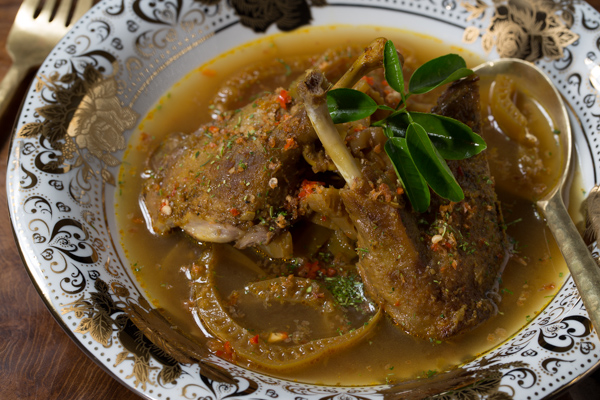
Jukut Ares is a special ceremonial soup made from young banana stems and duck meat (although this could be substituted with the meat of other animals)
Tipat Cantok

This Balinese salad is a mix of steam vegetables (water lily, long beans and bean sprout), rice cake, tofu, peanuts and spicy peanut sauce.
Pepes Ikan
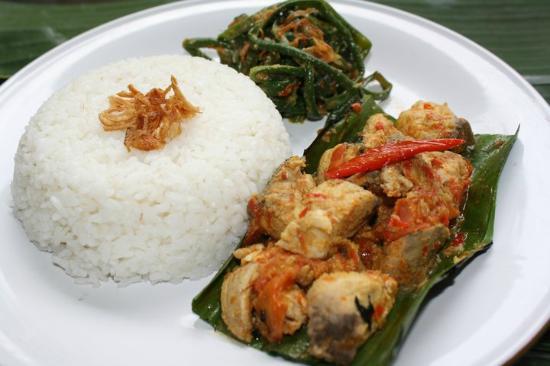
Pepes is an Indonesian cooking method in which the food, in this case fish (ikan), is wrapped in banana leaf and then steamed or grilled on charcoal. This cooking technique compresses the rich spice mixture against the fish while being cooked, and also adds a distinct aroma of cooked or burned banana leaf.
Plecing Kangkung
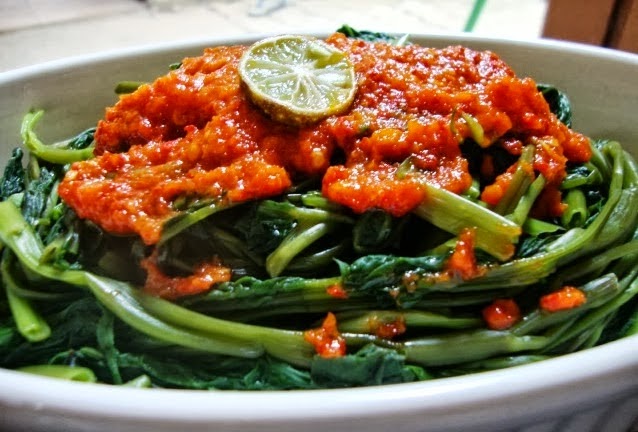
Plecing Kangkung is typically made of steamed water lily with chili and tomato sauce, although it may also come with other vegetables like bean sprout or long beans and fried peanut. It is normally served cold.
Lawar
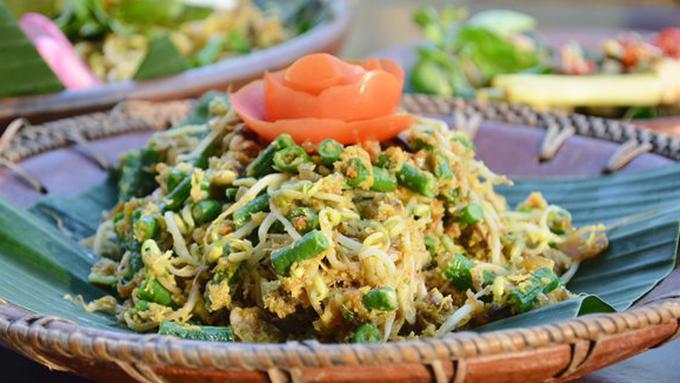
This traditional Balinese dish is created from a mixture of vegetables, grated coconut, minced meat (or jackfruit), *base genep and keffir life
Mie Kuah
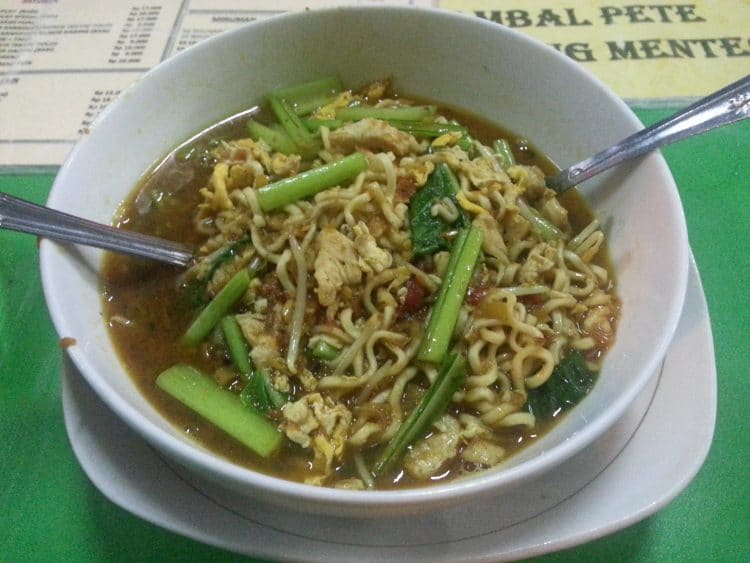
This traditional Balinese noodle soup is packed full of flavor and comes with plenty of vegetables and usually a few chunks of meat.
Sayur Urab

This dish typically includes fried garlic, chili, roasted grated coconut, keffir lime fruit, and chopped long bean (although jackfruit and lawar can also be added).
Martabak Telur

This spicy folded omelet pancake is filled with mixed vegetables, meat, onions, and seasoning. The thin Martabak skin is folded into an envelope shape, then deep fried until crispy
Sate
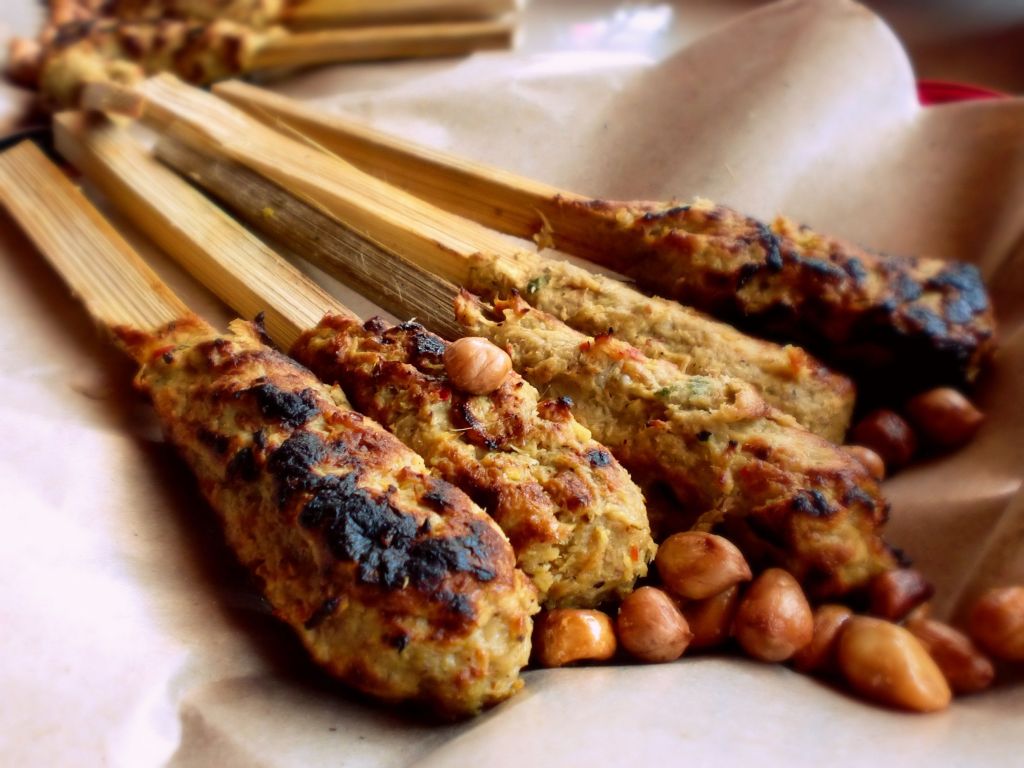
Sate refers to grilled slices of chicken, goat, beef, or pork skewered on sticks.
Sate lilit is Bali’s own peculiar creation, which is marinated with coconut milk and other spices.
Nasi/Mie Goreng

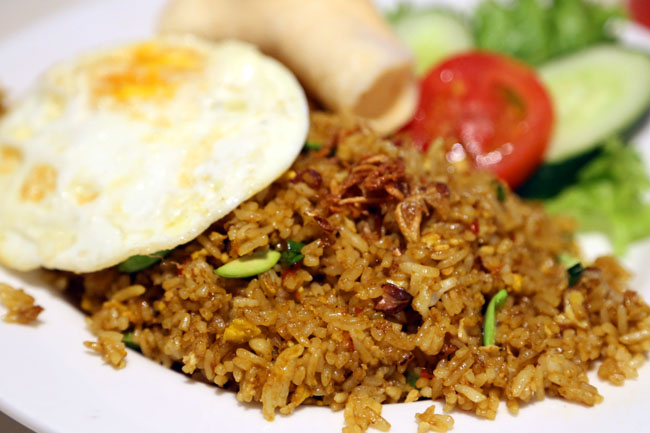
Whether you choose to eat the fried rice (nasi) or fried noodles (mie), the dish will typically include a smattering of mixed veggies and some type of meat (typically chicken) with an egg on top. You’ll also usually get a few slices of cucumber or tomato and several shrimp crackers on the side.
*Bakso

Although you’ll see popular street food dish everywhere, I DO NOT RECOMMEND TRYING IT! These nasty, grey-colored mystery-meat meatballs taste as gross as they look. I’m only including it on this list because you WILL see it everywhere and I want to save you from putting it in your mouth.
Sweet
Dadar gulung
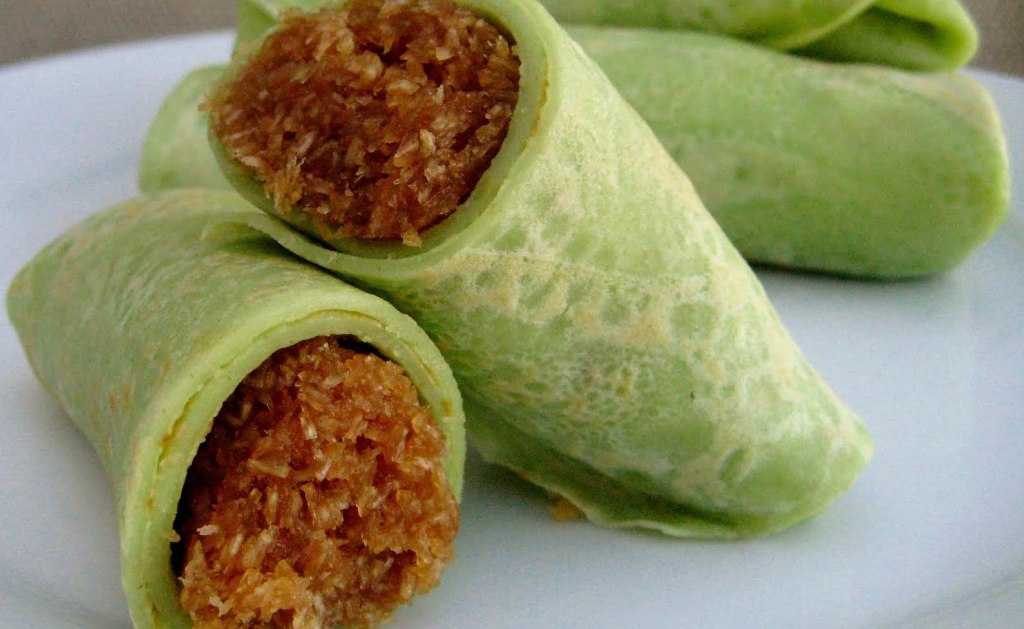
The green color of this sweet coconut “pancake” (more like a crepe) comes from the pandan leaves that are mixed into the rice-four batter. Once cooked, these pancakes are filled with a mixture of grated coconut and palm sugar.
Laklak
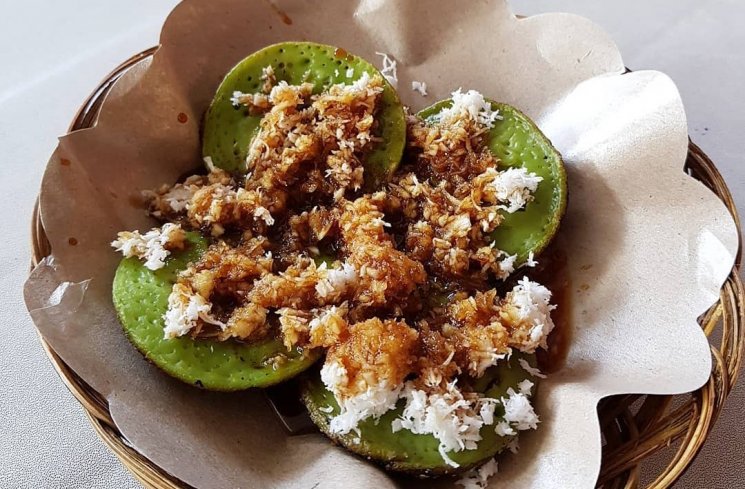
Laklak are small, Balinese-style spongy cakes made from rice flour, pandan and coconut milk, and topped with grated coconut and palm sugar.
Pisang Goreng
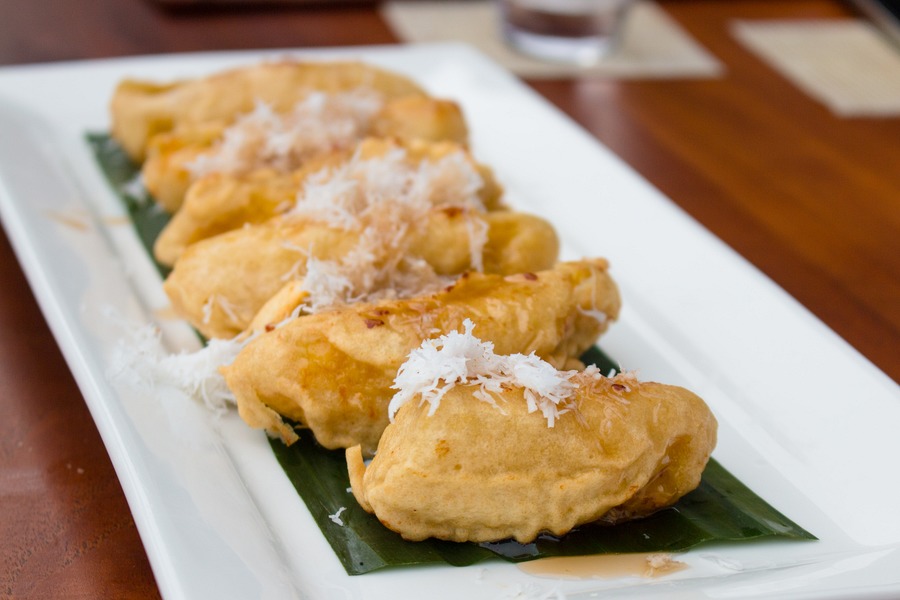
Pisang goreng is a snack made of banana or plantain, covered in batter or not, being deep fried in hot cooking oil, and covered in chocolate (and also cheese).
Roti Bakar

Roti Bakar,” the humble toasts, were the king of all midnight snacks in Indonesia.
These buttery, charcoal-y toasts are usually eaten to soak up the alcohol left in your system after a big night out, but they can also be enjoyed as an evening snack or as dessert after dinner.
Terang Bulan (or Martabak Manis)
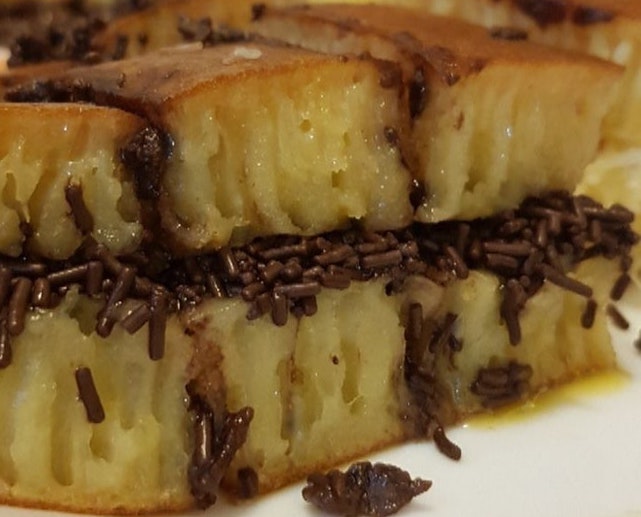
The thin, pancake-like batter is deposited into a deep, oiled cast iron pan and slowly cooked until the center puffs up with tiny holes. Butter is then melted onto the hotcake – a LOT of butter. Toppings (such as chocolate rice, peanuts, and cheese) are generously sprinkled onto the cake before it is folded in half and cut into slices.
Es cendol

Indonesian cendol is less colorful than the cendol in Malaysia and Singapore, since it only comprises green jelly, coconut milk and palm sugar.
The “green jelly” of the cendol in Indonsia is made from cassava flour, rice flour and panda leaf
Drinks
Jamu
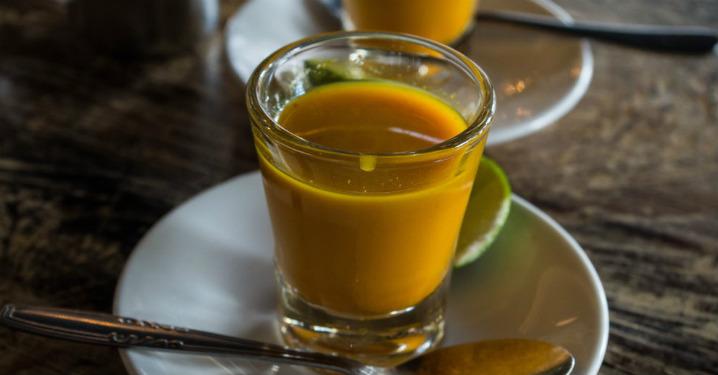
Each household and restaurant in Indonesia has their own unique recipe for this popular herbal drink, but the main ingredients remain the same: turmeric, honey, ginger, and egg yolk. However, egg yolk is likely only to be included in TRULY home-made recipes due to concerns with bacteria and salmonella.
Loloh Cemcem

This local herbal drink is made from hog-plum leaves (cemcem), tamarind paste, palm sugar, grated young coconut and salt (to taste). It’s made by locals in the Penglipuran traditional village.
 acaligirlinbali.travel.blog
One thought on “Must-Try Local Foods in Bali”