
Where is it?
Click Here for the exact Google Maps location.
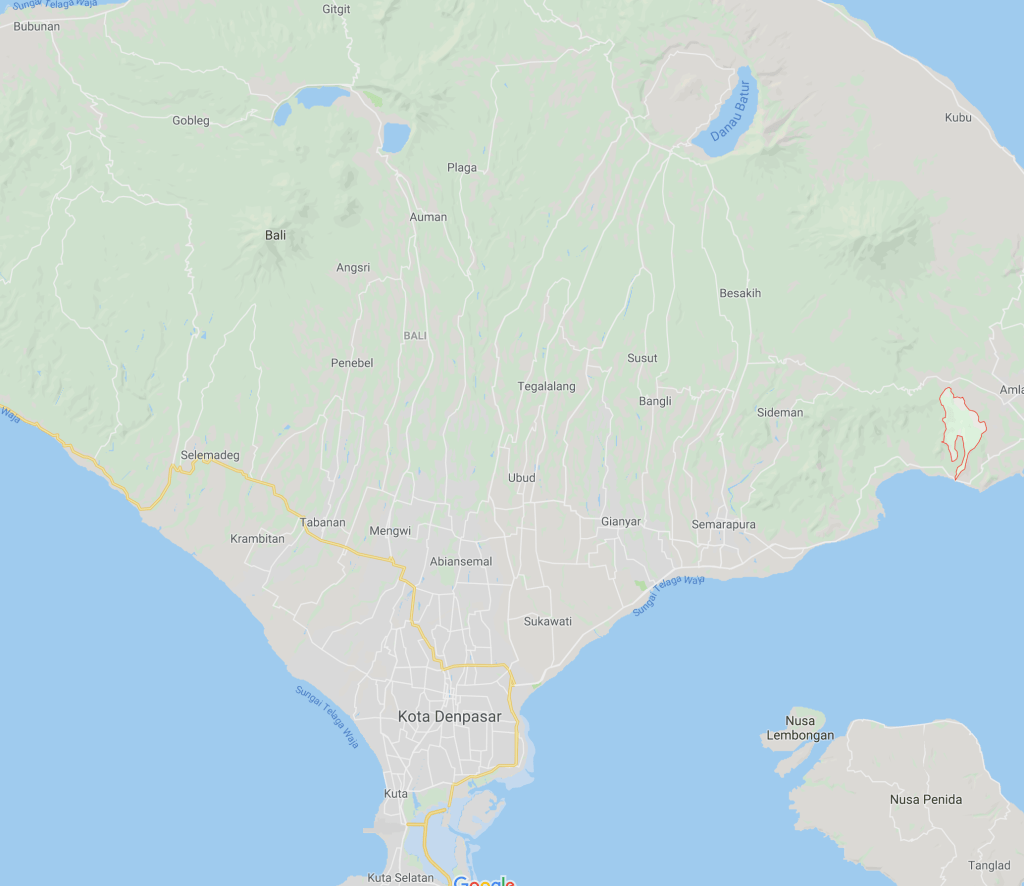
Tenganan is located:
- 1.5 hours from Ubud
- 2 hours from Canggu
- 2 hours from Ngurah Rai Airport
How much does it cost?
Visitors to Tenganan are asked to pay a small donation of $1-2 (20-30k IDR) to help support the local community.
When should I visit?
To avoid the crowds, arrive at the village early in the morning (8-9am) or later in the afternoon (3pm).
Also, it is best to visit Tenganan in June, since this is when the yearly Perang Pandan (aka Pandan War or Mekare-kare) takes place. In this event, local village men fight one another using pandan leaves to prove their manhood.
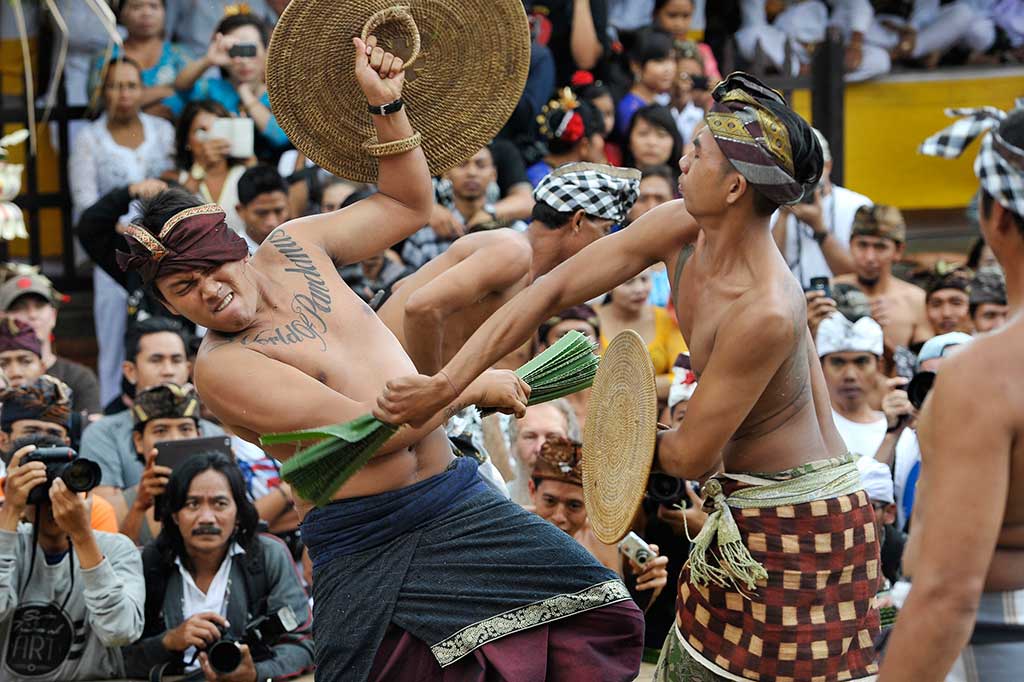
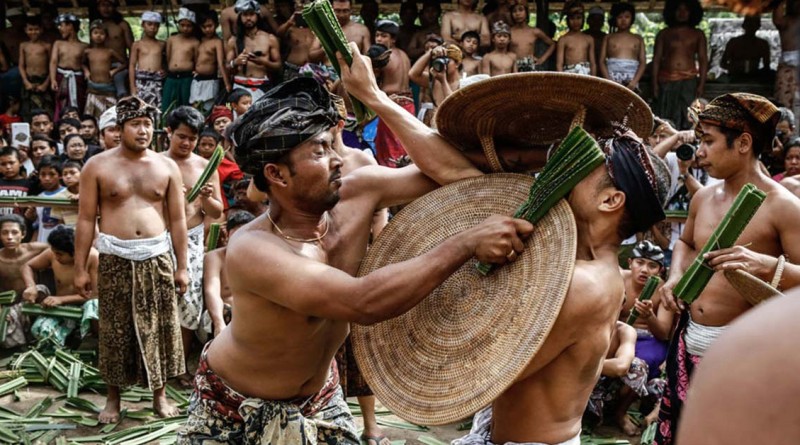
If fighting isn’t really your thing, it’s still worth visiting the village in June, as the celebrations and offering ceremonies in honor of Lord Indra are truly spectacular.
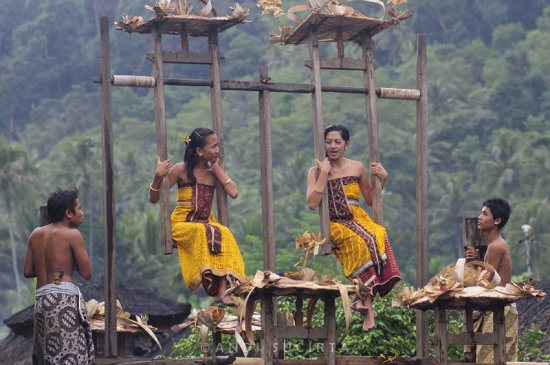
However, if you can’t make it during June, the village also holds many traditional ceremonies in December, January, and February.
What is There to Do/See?
Skilled Craftmanship
*You are not obligated to purchase anything in the village. One of the most enjoyable activities this traditional village offers is simply to be able to watch locals at their craft: weaving, carving, and painting traditional items that hold both cultural and historical significance for the community.
Ikat Weaving
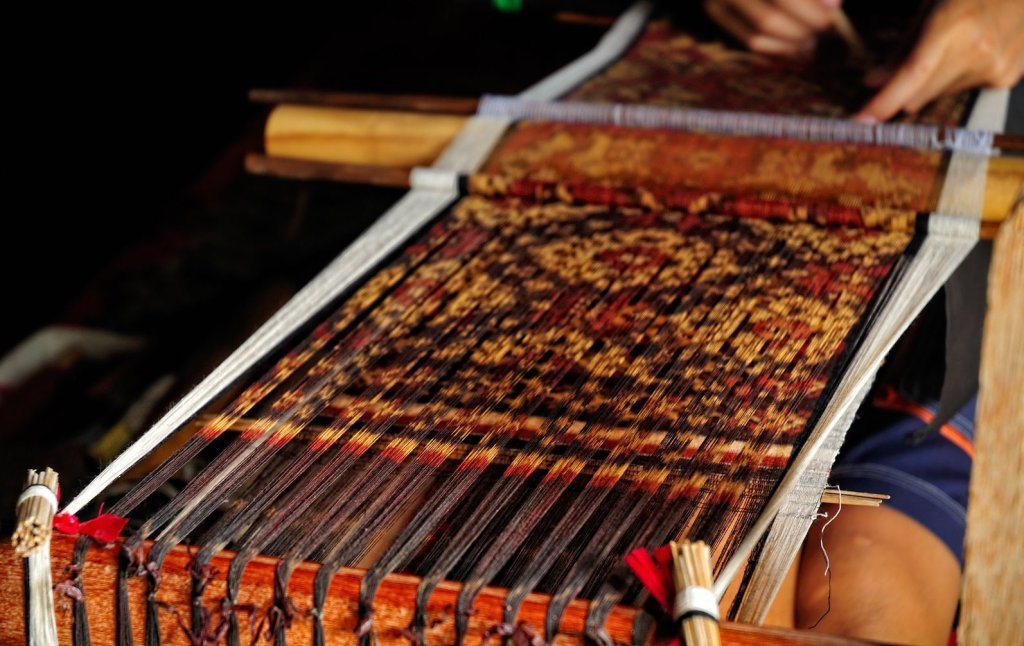
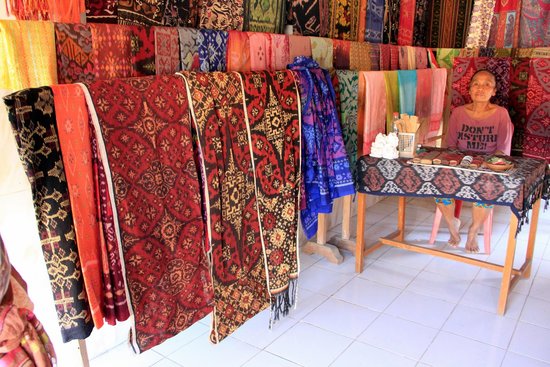
The one thing Tenganan is REALLY famous for is the intricate weaving of the double-ikat Geringsing cloth. Tenganan is one of only 3 places in the world to produce/weave Geringsing (the other two being Gujarat in India and Okinawa in Japan). The Geringsing weave is the rarest technique of ikat weaving in the world today.
In this unique process, both the horizontal and vertical threads are dyed in a special fashion so that, when woven, preselected designs appear in the cloth. The traditional pieces have only three colors, but can take a month or longer to produce.
*Expect the prices in the village to reflect the craftsmanship of the local women and the rarity of the design and technique.
Bamboo Painting / Etching
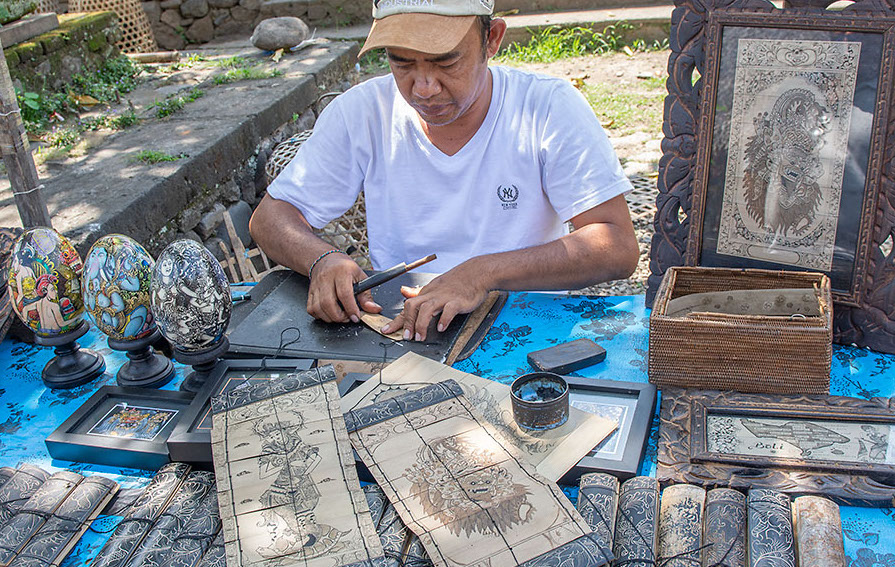
The local Tenganan men also contribute to the community thought craftsmanship by hand-painting calendars into lontar leaves, and decorating them with fantastical Balinese characters and beautifully handscripted Balinese letters. While you can purchase these elsewhere in Bali, if you buy in Tenganan you can be certain that it was made by hand.
Various Crafts
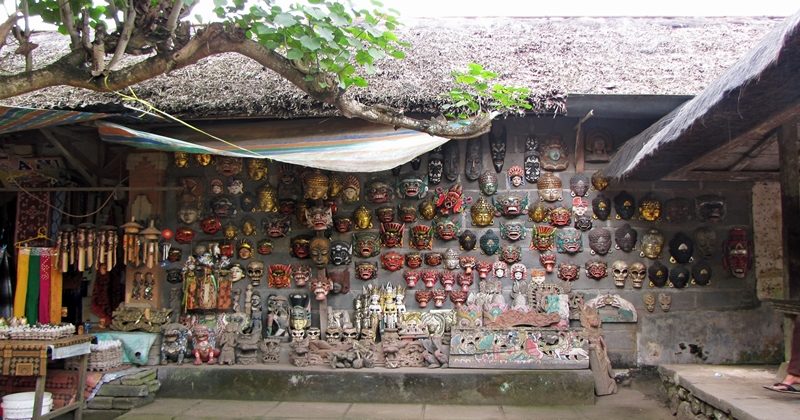
Among the other crafts you can purchase – as well as watch locals make – include painted wooden eggs, ata and wicker baskets/bags, and various wooden carvings.
A Glimpse into the Past
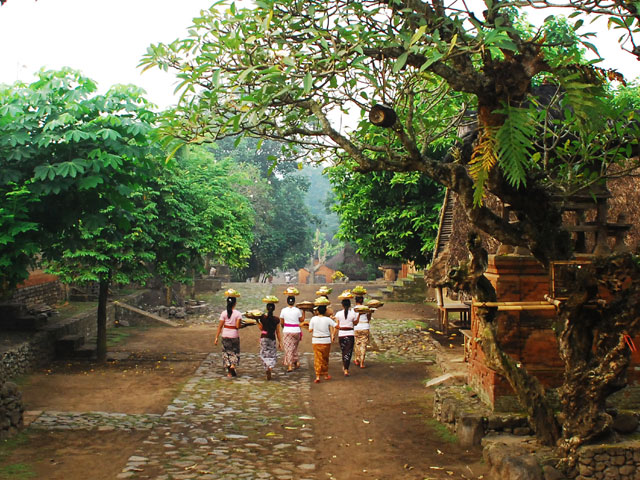
Tenganan is, ultimately, a heritage village. With cobbled paths, hand-built houses, locals attending to temples, and women carrying fruits and vegetables in baskets on their heads, Tenganan is where you can really get an idea of what Bali from days gone past must have once looked like.
Be Your Own Tour Guide
About the Village:
According to legend, the area in which Tenganan village is now located was once ruled by the unjust and cruel King Maya Denawa, who forbid the local Balinese from performing their religious rituals (And as anyone who’s been to Bali knows, there is nothing more important to the Balinese than their religious rituals). Because of this, the Hindu god Indra (the god of war) summoned fierce warlords to destroy King Maya Denawa.
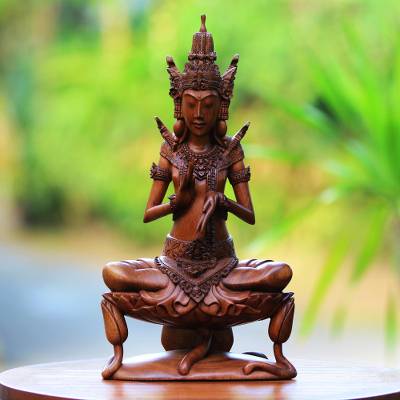
Once the cruel King was defeated, the people of Tenganan were selected by the god Indra to administer the territory and to use every means to keep it pure and clean in accordance with a divine plan to make it a microcosm of the world. *The Tenganan villagers believe the God Indra to be the god of all gods.
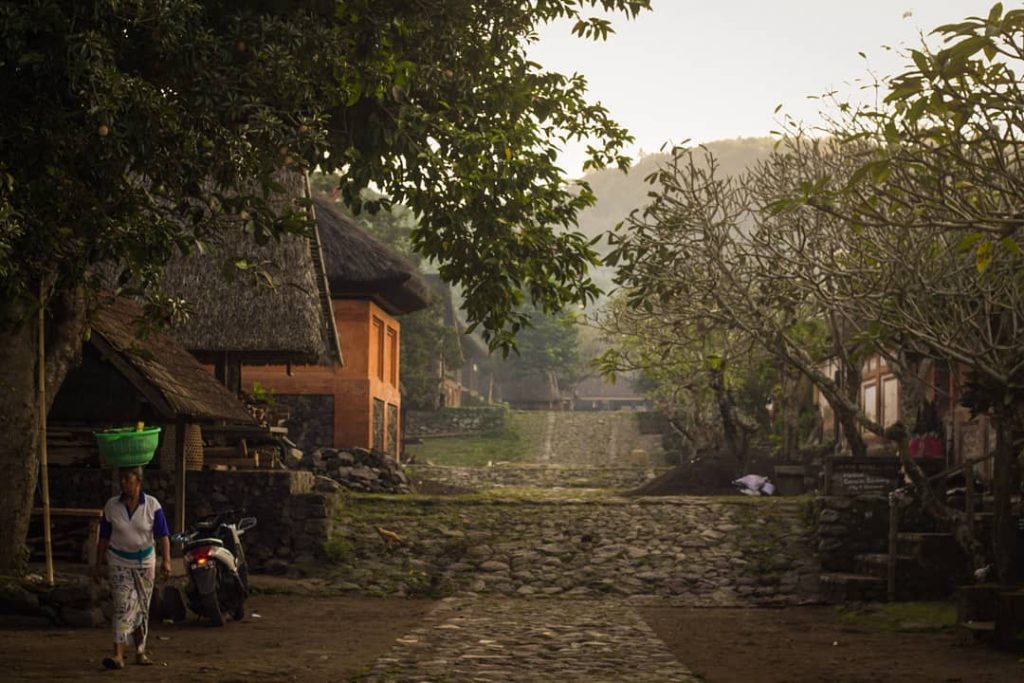
The village is surrounded on all sides by high solid walls. Although there are now four gates in the wall (north, south, east, and west) through which people can enter and exit, it wasn’t always that way. Once considered by anthropologists to be one of the most secluded societies in the Indonesian archipelago – so much that even Balinese from other villages could not enter it – the village only opened its doors to visitors in the late 1980s for the first time.
To this day, Tenganan remains an entirely self-sufficient village. It is an agrarian village in the traditional Balinese structure and owns enormous tracts of fertile and well-cultivated lands. By working the fields, maintaining the local forest, and taking care of the livestock, the villagers produce enough to fill every need of the village.
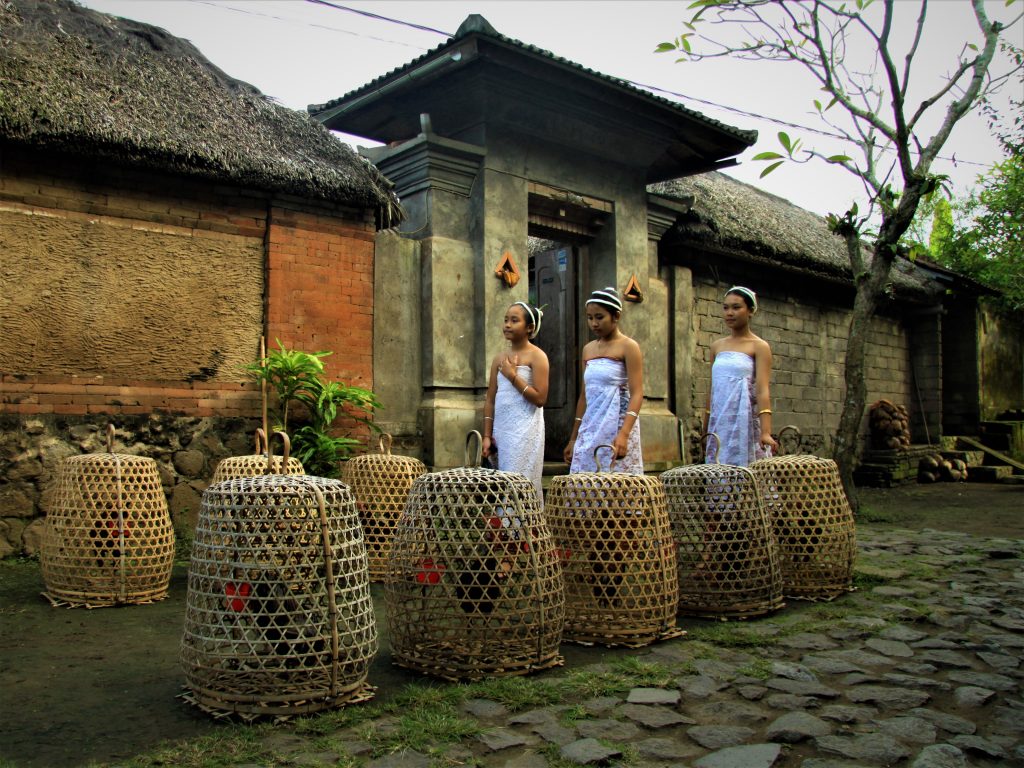
Tenganan village offers a unique perspective on local life in Bali since, even though it is now opened to the public, it is still very much protected by a strict code of isolationism. Indeed, the villagers still adhere to centuries’ old rules and regulations.
For example:
- Only individuals born in the village may become full members of the community.
- No outsiders may dwell in the village.
- Villagers are forbidden from marrying outside the village.
- Divorce and polygamy are not allowed.
- Women and men hold equal political and social power.
- All income is shared by the community as a whole, according to needs.
- Individual ownership of property is not recognized.
- Village leaders are elected by popular vote.
The locals’ customs and way of life are passed from one generation to the next, and are respected and honored by the villagers. Because of their dedication to the past, the people in Tenganan have preserved the traditional Balinese culture of Bali Aga. The Tenganan people are proud of their living conditions, their crafts and their customs. For them, community is the most important thing.

Overall, the village is ruled by the theory of interconnected-ness: from environmental management to gender relations, and from the layout and architecture of the village to patterns in the geringsing textiles the village is so well-known for.
Other Interesting Facts:
- The village is set up in a system of levels based on age (the farther into the village you walk, the higher you climb):
- The youngest families live at the bottom of the village – where the artisan stalls and shops are also located – while the eldest members of the community live at the top.
- In the middle of the village is a 20-meter-long wooden gazebo (balé) which serves as a kind of council house in which administrative decisions are made.
- Next to the village council house is a drum tower: the drum is beaten 21 times at the start of each day.
- Also in the village are a series of communal pavilions (balé banjar) which serve for formal and informal meetings and ceremonial gatherings
- The village’s main temple (Pura Puseh) is situated at the northern end of the complex and is surrounded by huge frangipani and banyan trees.
 acaligirlinbali.travel.blog