
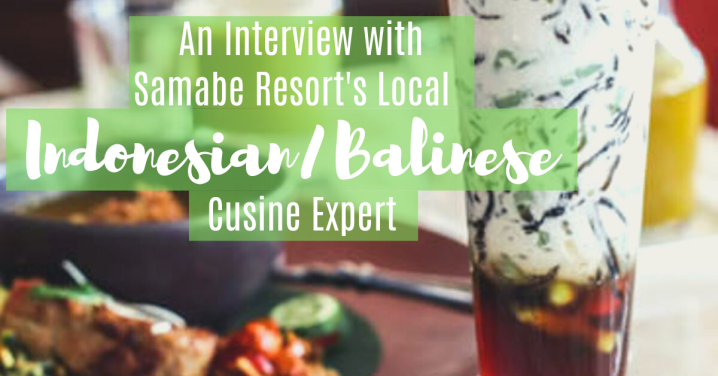
Last week I was invited to interview the head chef at the Rempah-Rempah Restaurant at Samabe Resort in Nusa Dua. Chef Bagus (the head chef) specializes in local Indonesian and Balinese cuisine and has over 30 years of experience in the culinary industry.
To say I was excited to get the chance to have all my questions about Indonesian and Balinese cuisine answered is a total understatement. I feel like I’ve been eating this food for months now, but I still don’t really know almost anything about it – like what spices are used and what truly differentiates it from other Asian cuisines.
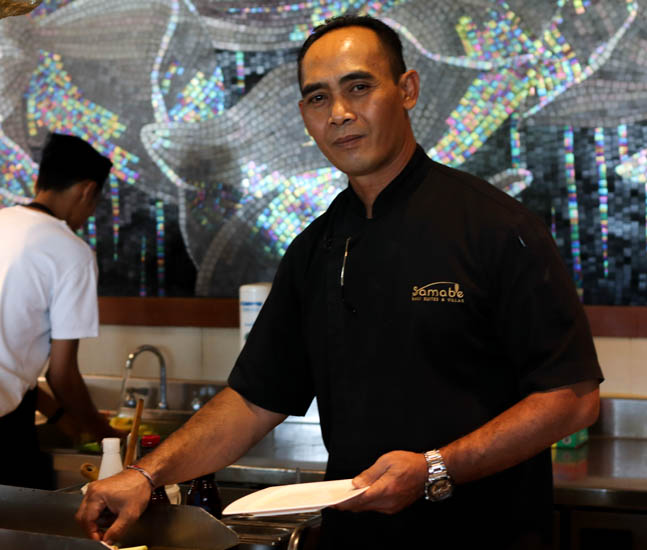
After talking with Chef Bagus though, I finally feel like I truly understand what makes Indonesian – and especially Balinese – cuisine so special! And I’m going to share everything I learned about one of my favorite Asian cuisines with you so that when you come to Bali (and trust me, you will!) you’re excited to get off the beaten food path and try more than just the typical “Nasi Goreng”.
And Samabe Resort in Nusa Dua is the perfect place to start, especially if you’re feeling a little iffy about street food carts and local warungs. While it’s not somewhere I would have originally thought to go to get insight into the local cuisine, my experience there and my interview with Chef Bagus made me realize how wrong I was.
The restaurant at Samabe not only boasts an extensive Indonesian menu, Chef Bagus prides himself on keeping all of the recipes 100% true to their street-food counterparts. The only difference – and it’s a big one in a place where MSG is as common as salt and pepper – is that he makes each dish from scratch using only the freshest ingredients (and it goes without saying that he never adds any artificial sweeteners or flavor enhancers).
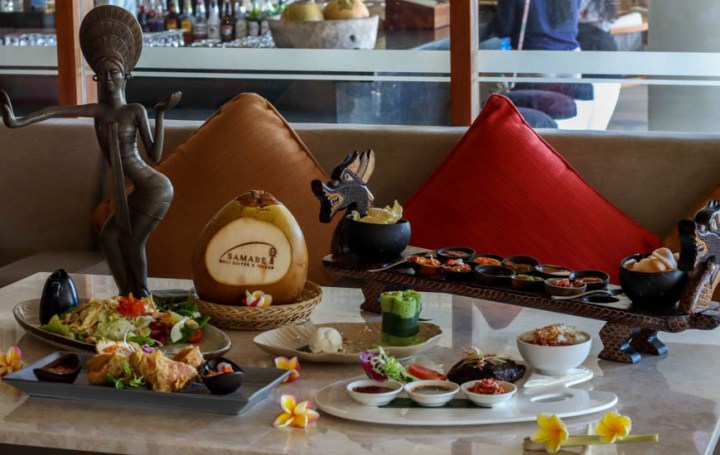
Although I don’t yet have the budget to stop eating the local street food, if I did I would be eating Chef Bagus’ food at Samabe every day.
So, without further ado… here’s everything I learned about the local cuisines from the extremely knowledgeable and talented Chef Bagus:
Spices Commonly Used in Indonesian Cuisine
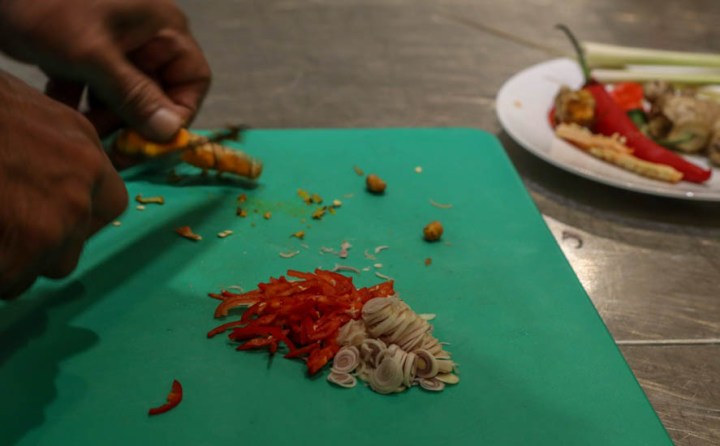
- Rumpa Rumpa
- Clove
- Ginger
- Galangal
- Lemongrass
- Turmeric
*What differentiates Indonesian cuisine from other Asian cuisines is the use of BOTH fresh and dried spices. They are mixed in most dishes, giving Indonesian cuisine a distinctive flavor profile.
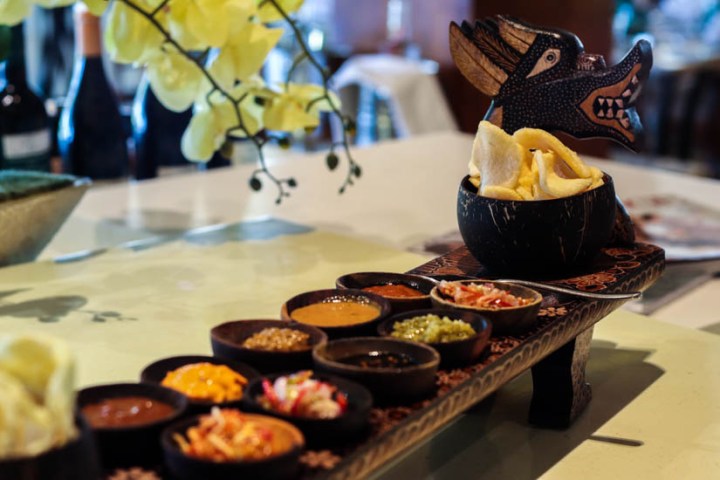
Main Differences Between Indonesian & Balinese Cuisine
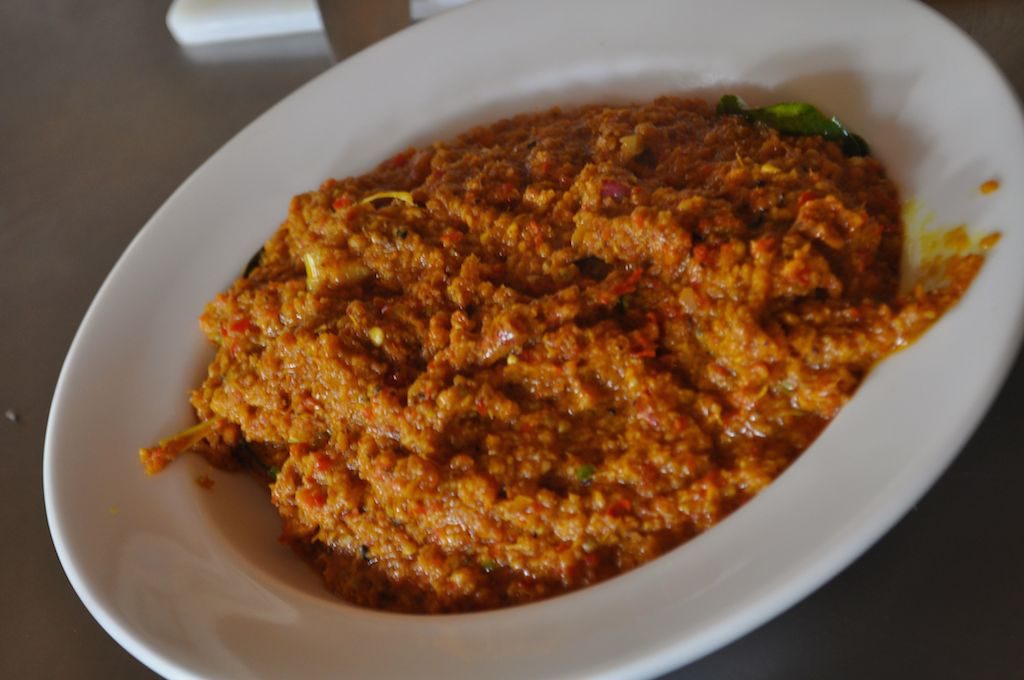
– Base Genep
While almost all Asian countries have sambal mattah (and in Indonesia it’s the most common Sambal offering), only Bali has Base Genep. Bali’s unique sambal is characterized by its lack of shrimp paste (a common ingredient found in most other sambals, including sambal mattah).
Made with: garlic, shallots, coriander, turmeric, ginger, greater and lesser galangal, lemongrass, black and white peppercorns, onions, tamarind, red chillies, nutmeg, cloves, and candlenuts.
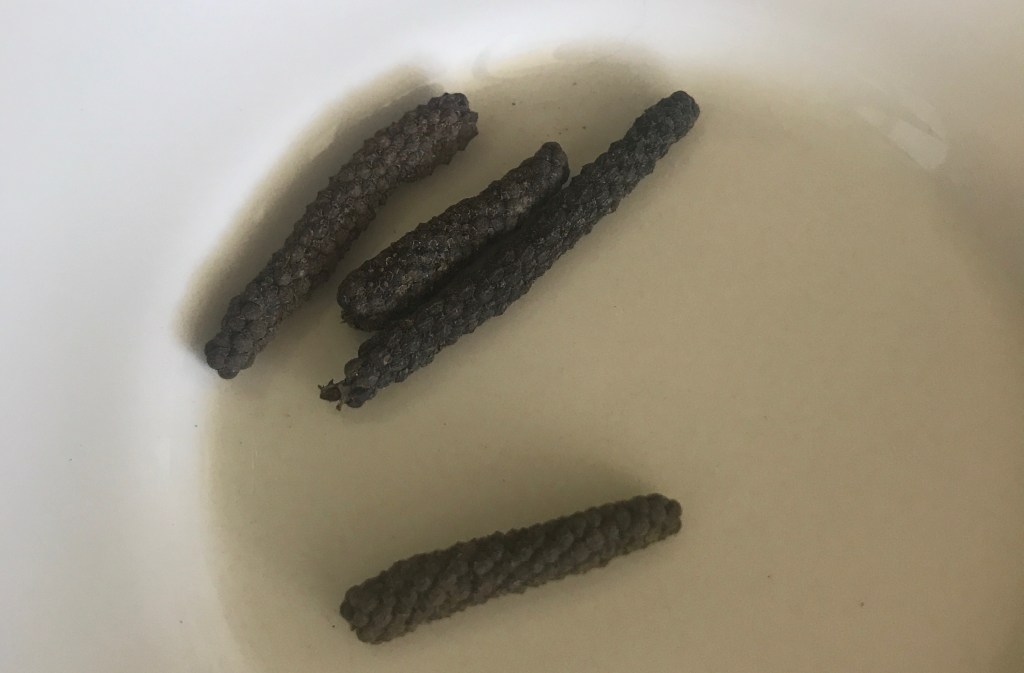
– Tabye Bun
This small spice is similar in taste and flavor to black peppercorns, but it has a distinctively sweet aftertaste that distinguishes it from its more common counterpart. This spice is only used in uniquely Balinese dishes, and not their Indonesian counterparts.
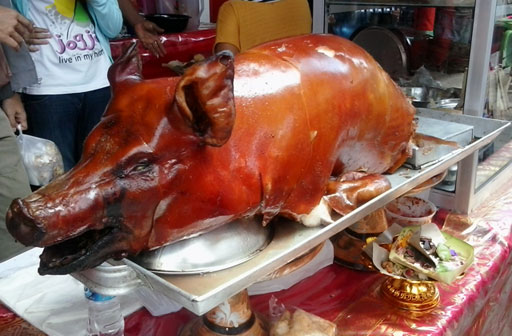
– Pork
Indonesia is a majority Muslim country. In fact, of all the countries in the world it has the highest Muslim population in the world. Bali, however, is predominately Hindu. And these differences in religion have created a MAJOR difference in cuisine. While pork is NOT in any typically “Indonesian” dish, it is a main component in one of THE dishes tourists must try on a trip to Bali. Babi Guling, or whole roasted suckling pig, is one of the best and most popular “Balinese” dishes.
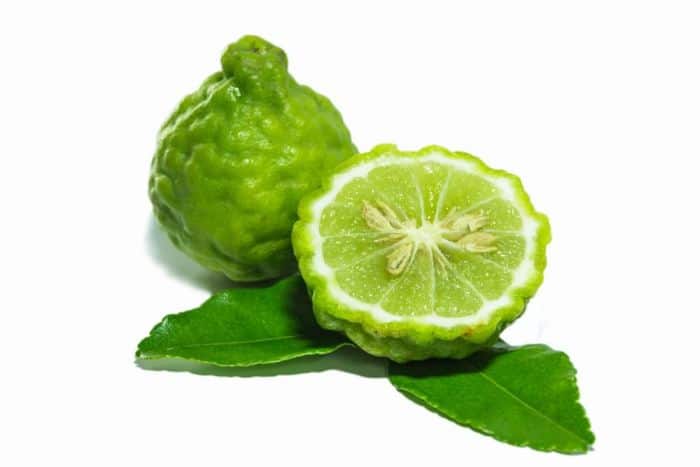
– White Turmeric & Keffir Lime
While turmeric is a commonly used spice in almost all Southeast Asian cuisines, Balinese cuisine specifically uses white turmeric in its dishes (so that the food doesn’t have that vibrant yellow color associated with Indian and Sri Lankan food). And, much like many parts of Thailand, keffir lime is a common ingredient in Balinese cuisine.
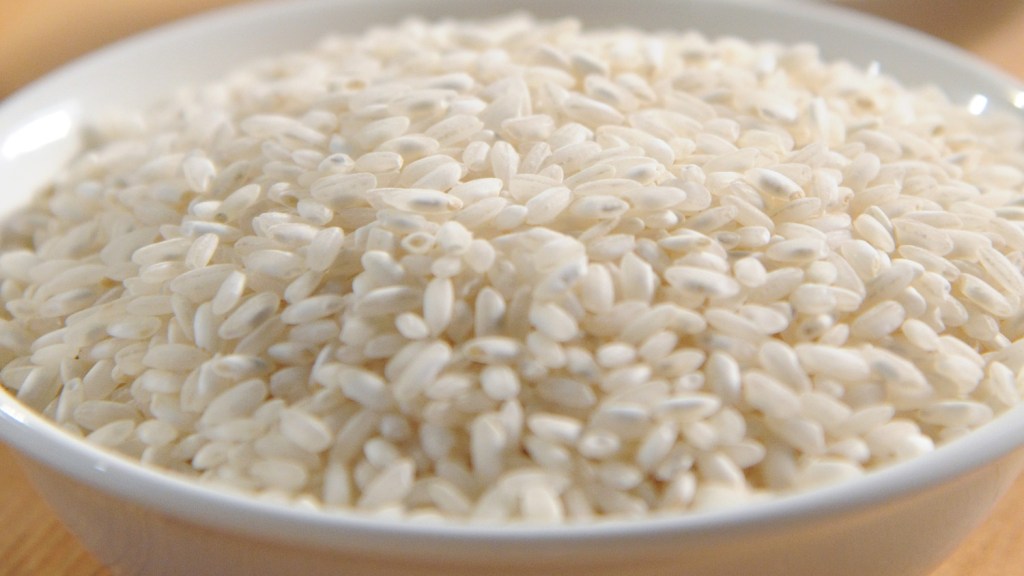
– Potato vs. Rice
If a dish includes potato, you can bet with 90% accuracy that it’s a traditionally Indonesian dish. For example, the popular Indonesian salad Gado Gado (God-oh) comes with potato instead of rice and includes hard-boiled egg. It’s Balinese counterpart, Tipat Cantok (teapot Chawn-toke), however, comes with sliced up sticky rice cake instead of potato and no hard-boiled egg. They both include a variety of vegetables, sprouts, and tofu and are covered in a delicious spicy peanut sauce that can be extremely thick (almost like a peanut butter) or thin like a salad dressing depending on the local chef’s preference.
The Best of Indonesian/Balinese Cuisine
Meat
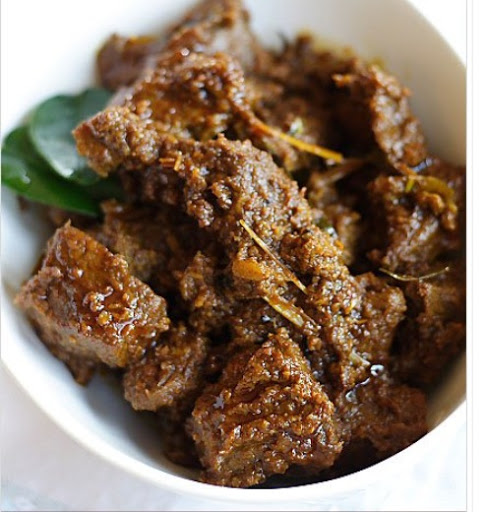
Beef Rendang (Indo)
*restaurant recommendation: Rempah-Rempah Restaurant at Samabe Resort
This incredibly tender and flavorful popular beef dish throughout Indonesia is a must-try while in Bali. Instead of searing the meat before cooking it in liquid, the beef is first simmered in coconut milk with a mix of Indonesian spices (as a paste) and lemongrass, and then seared. Typically served with rice, the addition of nutmeg to the spice paste truly makes the flavor of this Indonesian beef stew stand out.
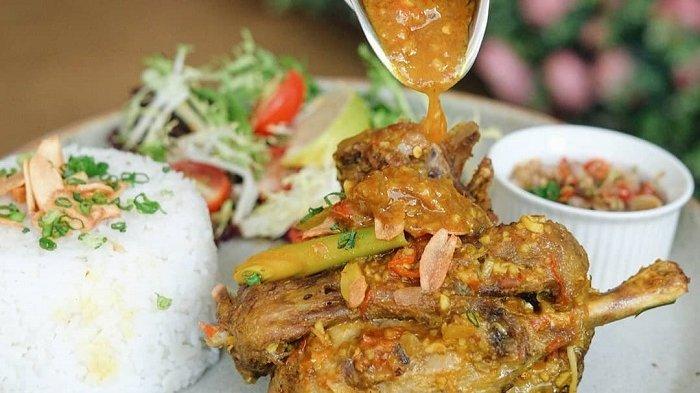
Bebek Betutu (Bali)
*restaurant recommendation: Bebek Bengil (locations in Jimbaran and Nusa Dua as well)
Popular in both Bali and Lombok, Bebek Betutu is a slow roasted, leaf-wrapped duck dish in rich bumbu betutu.
The term betutu (which often mistakenly is taken to mean “smoked) actually refers to the use of rice-husks in the cooking process. Heated by kindling of coconut husks, these piles of rice husks are used to cook the bebek (duck) for five hours to tenderize the meat to perfection.
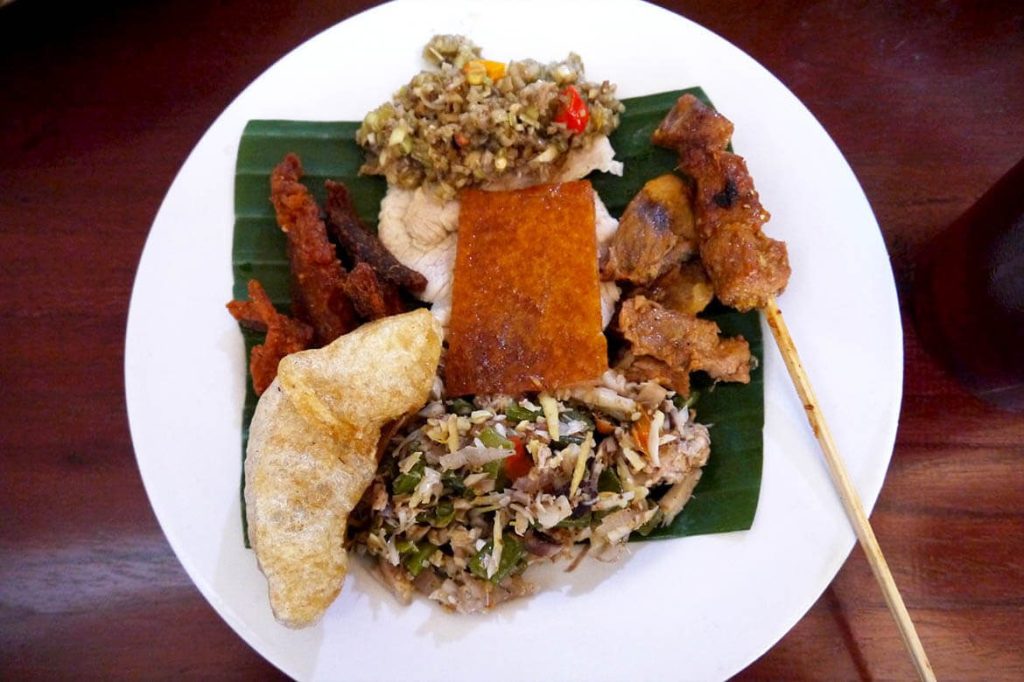
Babi Guling (Bali)
*restaurant recommendation: Babi Guling Men Lari
The delicious Balinese pork dish that you can’t find anywhere in Indonesia other than Bali, this whole roasted suckling pig is a true treat for pork lovers. While the crunch skin is widely considered to be the best, there really isn’t any part of this dish that disappoints.
In Babi Guling, the pig is stuffed with a spicy concoction of turmeric, coriander seeds, lemongrass, black pepper and garlic, before being roasted over a spit.
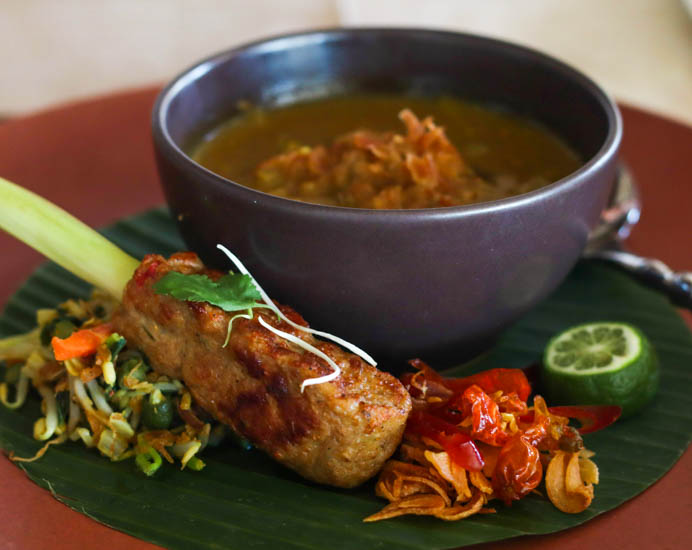
Jukut Ares (Bali)
*restaurant recommendation: Rempah-Rempah Restaurant at Samabe Resort
Jukut Ares is a dish made from young banana stems and duck meat (although this could be substituted with the meat of other animals). Jukut Ares is typically the main dish at special ceremonies in Bali, such as weddings, cremations, and holidays like Galungan and Kuningan.
Jukut Ares is popular in both Bali and Lombok.
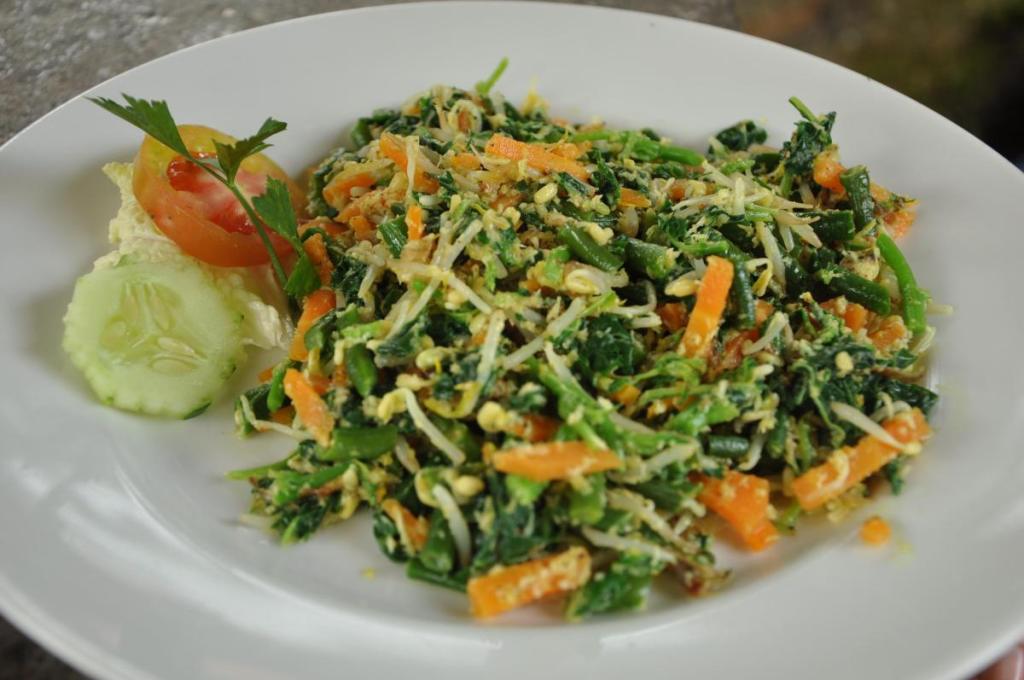
Balinese Lawar
*restaurant recommendation: served at almost every restaurant; a common Balinese side dish
Lawar, although popular throughout Southeast Asia, originated in Bali. This traditional Balinese dish is created from a mixture of vegetables, grated coconut, minced meat (or jackfruit), base genep and keffir life, and is typically served with steamed rice and another meat dish, such as babi guling.
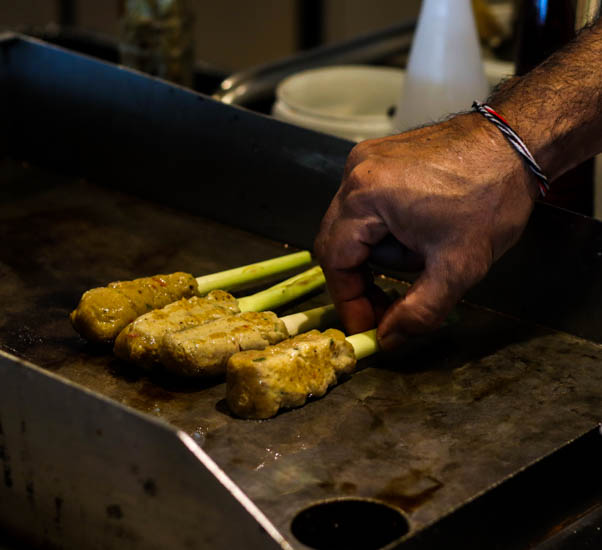
Sate (Indo)
*restaurant recommendation: Rempah-Rempah Restaurant at Samabe Resort
Satay, or sate in Indonesian, refers to grilled slices of chicken, goat, beef, or pork skewered on sticks. A common street food, it’s also to find this traditional dish in local warungs and nicer restaurants.a traditional food tourists can find in virtually every city in Indonesia. Sate Bunta is minced chicken meat mixed with spices (garlic, lemongrass, coriander, etc.) and placed on skewers in balls. Sate lilit is Bali’s own peculiar creation, which is marinated with coconut milk and other spices.
Vegetarian
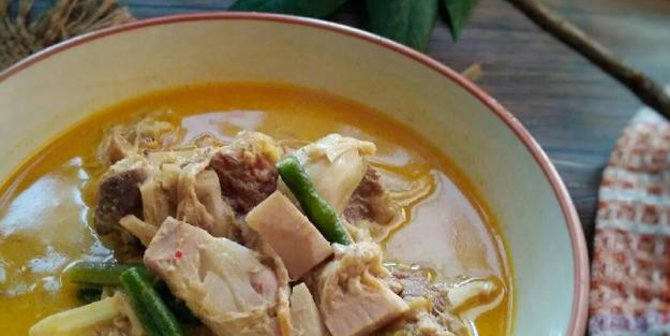
Curry Sayur (Indo)
*restaurant recommendation: Warung Makan Rama
Literally translated to vegetable curry, this amazing anti-inflammatory Indonesian soup boasts the ultimate trio – turmeric, black pepper, and coconut! And it’s packed full of local veggies (pretty much, whatever happens to be in-season).
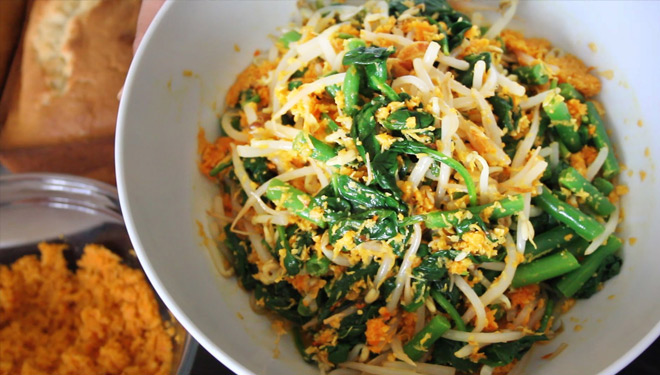
Sayur Urab (Bali)
*restaurant recommendation: served at most restaurants; a popular Balinese side dish
While this mixed vegetable dish can be served hot, it’s more common to have it cold in Bali because the owners of food stalls will prepare the vegetables and spices in advance then just mix them together for each portion they sell.
This dish typically includes: fried garlic, chili, roasted grated coconut, keffir lime fruit, chopped long bean (although jackfruit and lawar can also be added).
Dessert

Es Cendol
*restaurant recommendation: Rempah-Rempah Restaurant at Samabe Resort (although you can get it at street carts, avoid these as they are WAAAYYY too sweet and taste nothing like the real stuff)
Indonesian cendol is less colorful than the cendol in Malaysia and Singapore (see CNN cendol scandal here) since, in Indonesia, it only comprises green jelly, coconut milk and palm sugar.
The “green jelly” of the cendol in Indonsia is made from cassava flour, rice flour and panda leaf – which gives it its uniquely bright-green coloring.
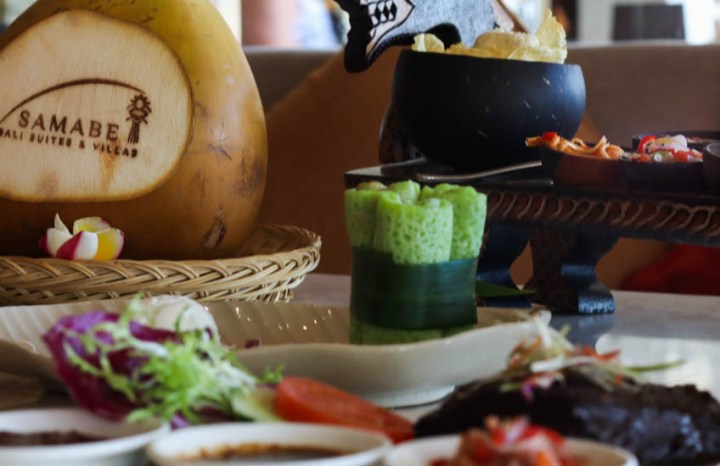
Dadar Gulung
*restaurant recommendation: Tukie’s Ice Cream
This sweet coconut pancake is a popular traditional kue (snack) in Indonesia. The green color of the “pancake” (more like a crepe) comes from the pandan leaves mixed into the rice-four batter. Once cooked, these pancakes are filled with a mixture of grated coconut and palm sugar to make it deliciously sweet and irresistible.
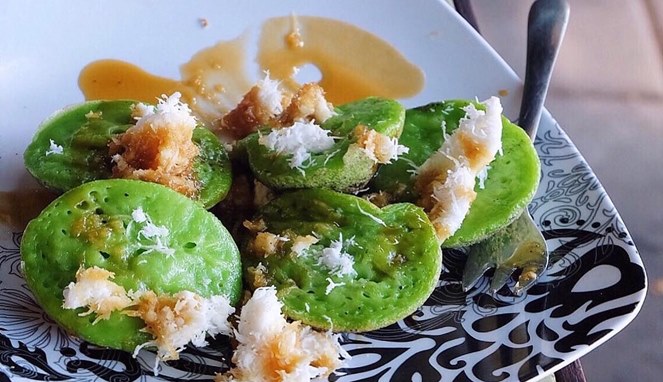
Laklak
*restaurant recommendation: Warung Ne Men Gabrug
Laklak are small, Balinese-style spongy cakes made from rice flour and coconut milk, and topped with grated coconut and palm sugar. Like klepon, laklak are green thanks to the addition of the pandan leaf.
Balinese people like to eat these pancakes served piping-hot in the morning for breakfast.
Drinks
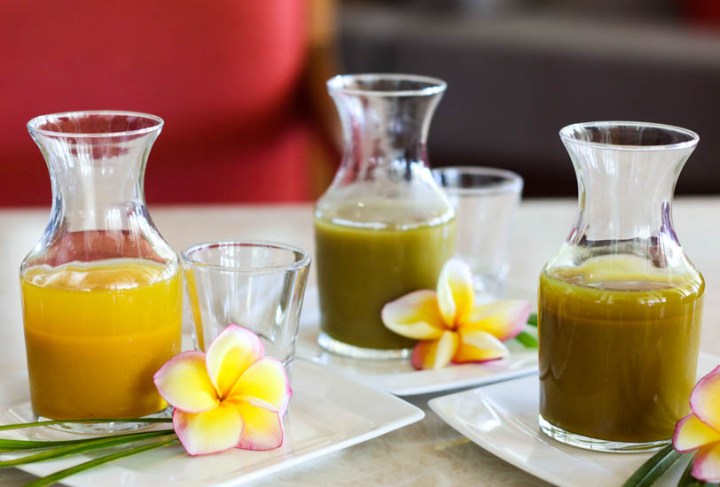
Jamu (Indo)
*restaurant recommendation: Bali Buda (several locations throughout Bali)
This traditional Indonesian medicinal beverage dates back approximately 1,300 years ago to the Mataram Kingdom.
While this plant-based tonic is often considered an acquired taste due to its strong, spicy, and bitter flavor, it is a favorite among the more health-conscious tourists
Each household and restaurant in Indonesia has their own unique recipe for this popular herbal drink, but the main ingredients remain the same: turmeric, honey, ginger, and egg yolk (egg yolk is likely only to be included in TRULY home-made recipes due to concerns with bacteria and salmonella).
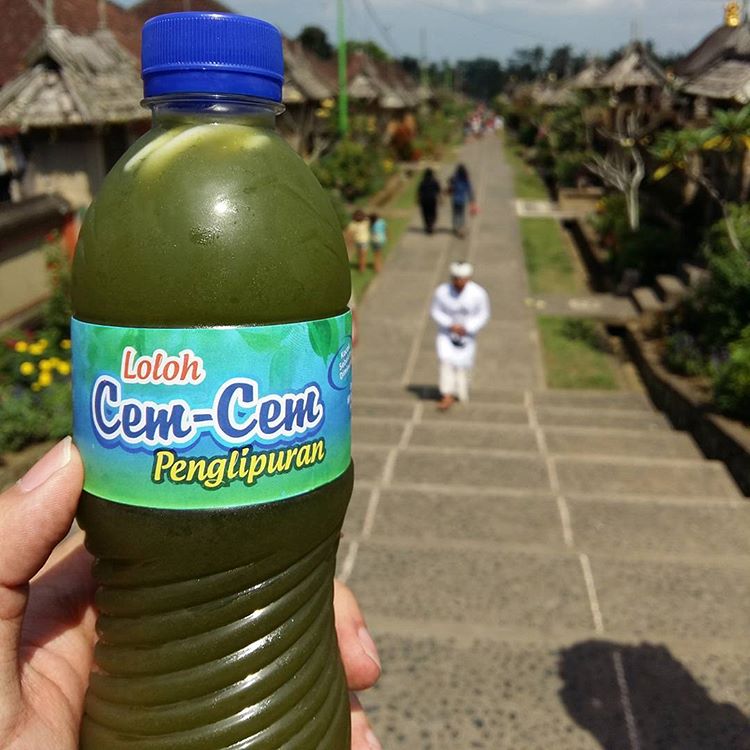
Loloh Cemcem (Bali)
*restaurant recommendation: outside locals’ houses in Penglipuran Village
While jamu is known for its strong and bitter taste, its Balinese counterpart, loloh cemcem, is more gentle on the pallet. The main ingredient of this herbal bevearge is hog plum leaves (aka cemcem), which are blended with jarak and betel leaves, as well as a variety of fruit and spices.
Consumed exclusively in Bali, loloh cemcem is said to have originated in Penglipuran Village, where tourists can still go to buy the homemade beverage from locals on the street and in almost every warung and shop.
Eat Like A Local
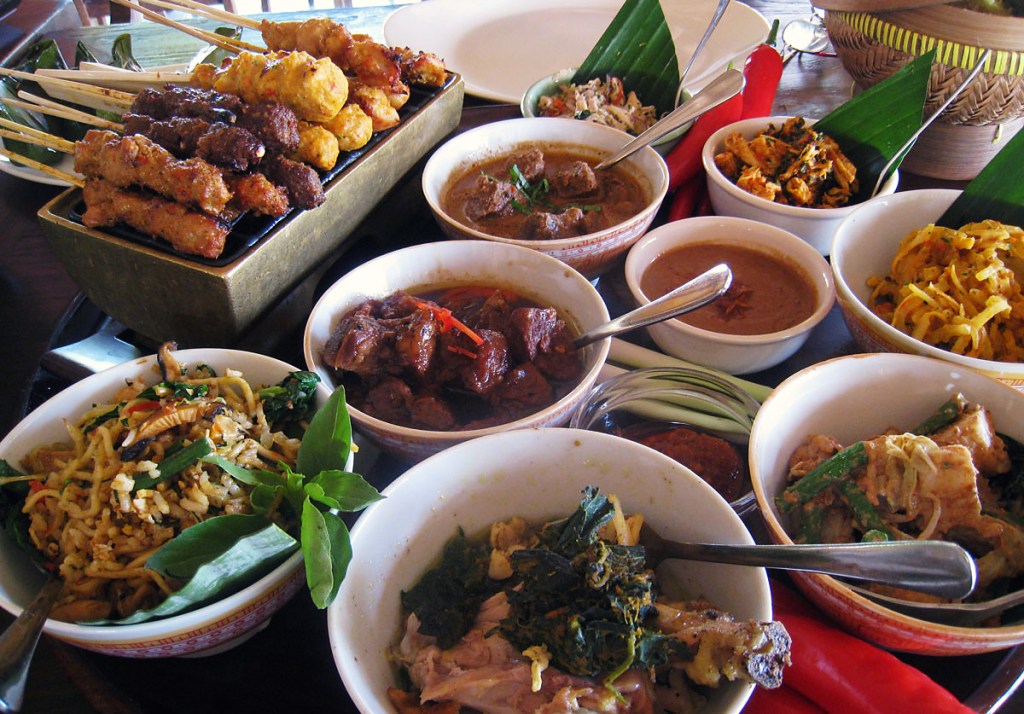
In the Western world, it’s typical for us to have 3 distince meal times everyday: Breafast (sometime between 7am-9am), Lunch (sometime between 12pm-2pm) and Dinner (sometime between 6pm-8pm).
But this isn’t the case in Balinese culture. In Bali, there are no set eating times, because only ONE meal is made each day. Yup, just one, giant meal.
In Bali, the “mamas” (aka women of the family, regardless of whether or not they have children) go to the market at 5am every single day to get only enough fresh ingredients for the food for that day. They cook everything they’ve purchased early in the morning and the set all the day’s food out buffet-style in the family compound. Everyone can come at any time throughout the day – as they feel hungry – to eat. The same food that the family eats is also used in the offerings to the gods that are placed throughout the family compound. Any leftovers are fed to the animals – dogs, chickens, etc.
Cheapest balinese dish: Nasi Jingo (5,000 rupiah = $0.35 USD)
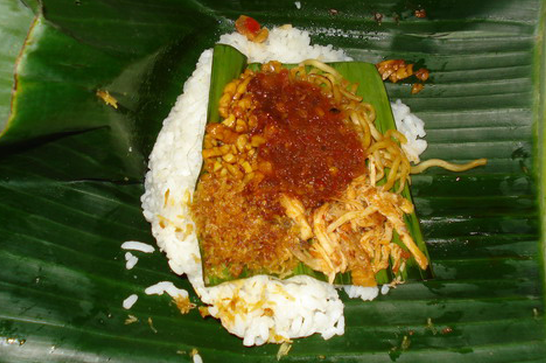
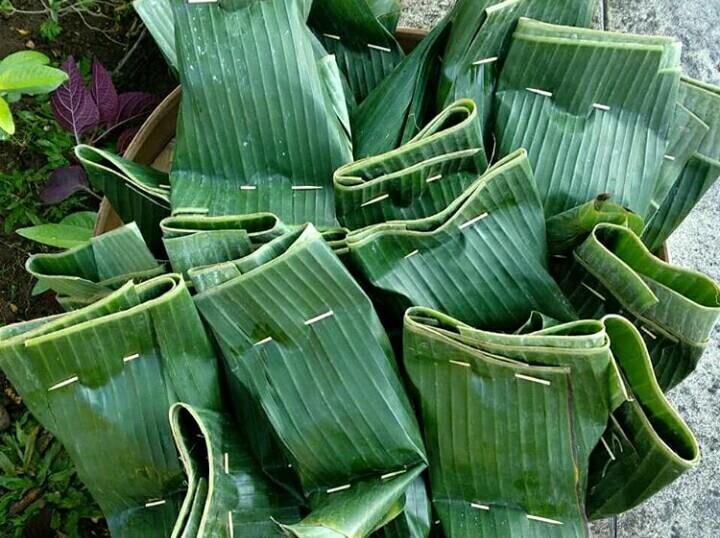
The dish includes rice, veggies, meat, fried peanut (kacang goreng) and fried grated coconut (serundeng) all wrapped inside a banana leaf that is fold into the shape of a cone.
 acaligirlinbali.travel.blog
2 thoughts on “An Insider Guide to Indonesian Cuisine from a Local Chef”